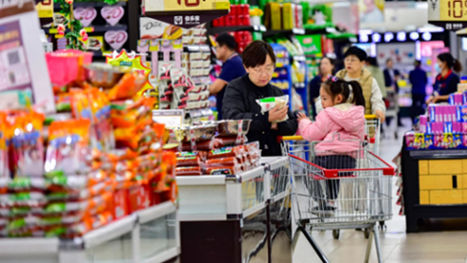
In an effort to stimulate consumer spending, the Chinese government has expanded its trade-in program. Now, people can exchange items such as microwave ovens, dishwashers, rice cookers, and water purifiers for discounts of up to 20% on new products. Initially, this program only included electronics like televisions, phones, tablets, smartwatches, and electric vehicles.
Government Allocates Funds for the Program
To support this expanded initiative, officials have allocated 81 billion yuan (£8.9bn; $11bn) for the current year. Since the program's launch in March, it has already shown "visible effects," according to the Ministry of Commerce. Consequently, there has been an increase in the sales of high-value goods like home appliances and cars.
Experts Question Effectiveness
However, despite these early successes, some economists question whether the program will significantly boost overall consumer spending. For example, economist Dan Wang remarked, "The measure is far from being enough to boost consumption." Additionally, Harry Murphy Cruise from Moody's Analytics pointed out that although sales of specific products have risen, the scheme hasn't driven a broader increase in consumer spending.
Additional Measures to Support Economy
Meanwhile, China continues to roll out more measures to bolster its domestic market as its exporters face growing international challenges. In December, Chinese leaders highlighted the need for "vigorous" efforts to encourage consumer spending.
Geopolitical Tensions Add Pressure
At the same time, geopolitical tensions are mounting. President-elect Donald Trump has threatened to impose a 60% tariff on Chinese goods. As a result, this adds more pressure on China's economy. Soon, China will announce its 2024 economic growth figures, with Beijing expecting around 5% growth.
This version incorporates transition words like "initially," "consequently," "however," "for example," "additionally," "meanwhile," and "at the same time" to enhance the flow and coherence of the text.