
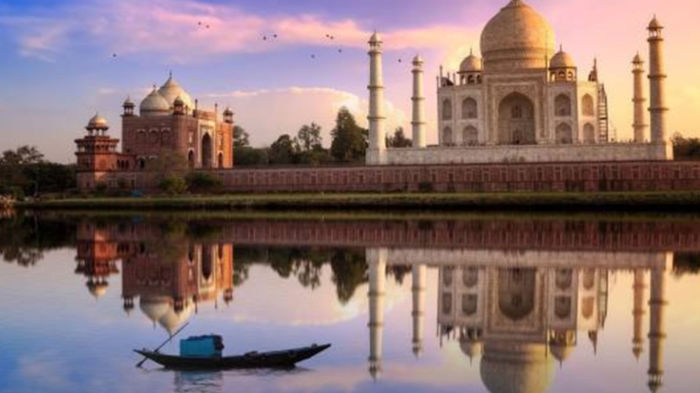

India is a land of diversity, with a rich mix of cultures and languages. It ranks seventh in the world by area and is the most populous country, as well as the largest democracy. Despite these remarkable features, India offers countless destinations for exploration and enjoyment. The country is home to many scenic spots, natural wonders, and historical monuments. One such place is Agra, a metropolitan city in Uttar Pradesh, known for its rich history and architectural beauty.
About City
Agra, a city known for its rich Mughal heritage and historical significance, boasts several iconic landmarks that attract millions of visitors each year. Below are the major locations in Agra, described in detail:
1. Taj Mahal
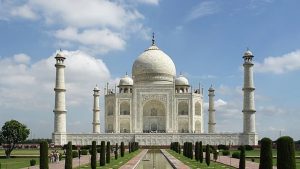
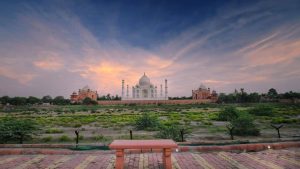
- Overview: The Taj Mahal is arguably the most famous monument in India and one of the Seven Wonders of the World. This stunning white marble mausoleum was built by Emperor Shah Jahan in memory of his wife Mumtaz Mahal, who died during childbirth in 1631.
- Features: The Taj Mahal is renowned for its breathtaking beauty, with its symmetrical gardens, reflecting pools, and detailed carvings. The central dome is surrounded by four minarets, and the entire structure is a masterpiece of Mughal architecture.
- Significance: The Taj Mahal symbolizes eternal love and is a UNESCO World Heritage Site. It attracts visitors from around the globe for its grandeur, architecture, and romantic history.
2. Agra Fort
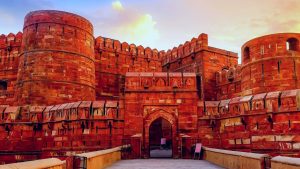
- Overview: A UNESCO World Heritage Site, the Agra Fort is a historic fort that served as the main residence of the Mughal emperors until the capital moved to Delhi. It was initially built by Emperor Akbar in 1565.
- Features: The fort is made of red sandstone and houses several palaces, mosques, and gardens. Notable structures inside the fort include the Jahangir Palace, Khas Mahal, Diwan-i-Aam (Hall of Public Audience), and Diwan-i-Khas (Hall of Private Audience).
- Significance: The Agra Fort played a significant role in the history of the Mughal Empire and offers a magnificent view of the Taj Mahal from certain points inside the fort.
3. Fatehpur Sikri
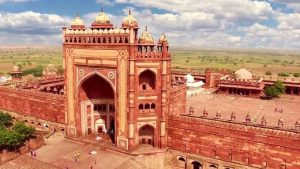
- Overview: Fatehpur Sikri was the capital of the Mughal Empire under Emperor Akbar for a short period (1571-1585). Today, it stands as a ghost city with well-preserved structures.
- Features: The complex includes beautiful architectural structures such as the Buland Darwaza (the grand entrance), Jama Masjid, Diwan-i-Khas (Hall of Private Audience), and Panch Mahal.
- Significance: The city is known for its fusion of Persian, Mughal, and Indian architecture. It is also famous for being an abandoned city due to water scarcity, making it a fascinating example of Mughal urban planning.
4. Mehtab Bagh
- Overview: Mehtab Bagh is a garden located across the Yamuna River, offering a clear and unobstructed view of the Taj Mahal. It is often referred to as the "Moonlight Garden" because of its stunning view of the Taj during the night.
- Features: The garden features terraced lawns, fountains, and walkways. It is particularly popular for its panoramic view of the Taj Mahal at sunrise and sunset.
- Significance: Mehtab Bagh is a peaceful spot for photography and reflection, making it a popular spot for visitors looking to capture the perfect shot of the Taj Mahal.
5. Itimad-ud-Daulah's Tomb
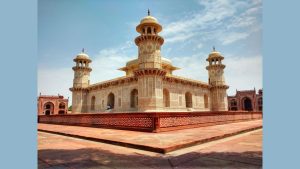
- Overview: Often called the "Baby Taj," this tomb is the resting place of Mirza Ghiyas Beg, a Persian nobleman who served Emperor Jahangir. The tomb was built by his daughter, Empress Nur Jahan, in the early 1600s.
- Features: The tomb is smaller and more delicate compared to the Taj Mahal but equally exquisite, with intricate marble inlay work, similar to the Taj. It is the first tomb in India to be made entirely of marble.
- Significance: This tomb is considered a precursor to the Taj Mahal due to its similar architectural style and design. It is one of the best examples of Mughal architecture.
6. Akbar's Tomb
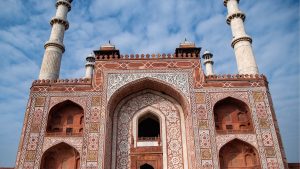
- Overview: Located in Sikandra, just outside Agra, Akbar’s Tomb is the final resting place of Emperor Akbar, the third Mughal emperor. The tomb is an impressive example of Mughal architecture.
- Features: The tomb is set amidst beautiful gardens, and its architecture blends Persian, Mughal, and Indian styles. The structure has four gates, each with elaborate carvings and inscriptions. The tomb itself is set on a high platform.
- Significance: Akbar’s Tomb is a symbol of Akbar’s tolerance and architectural prowess. It is a peaceful site for visitors and an important part of Agra’s heritage.
7. Jama Masjid
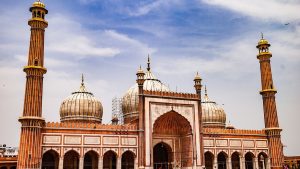
- Overview: Built by Emperor Shah Jahan in 1648, the Jama Masjid in Agra is a large mosque located near the Agra Fort.
- Features: The mosque is constructed from red sandstone and white marble, with a large central courtyard and three domes. It is an excellent example of Mughal religious architecture.
- Significance: The Jama Masjid is an active place of worship and is visited by both tourists and locals. It also offers a great view of the Agra Fort and is a peaceful spot in the busy city.
8. Chini Ka Rauza
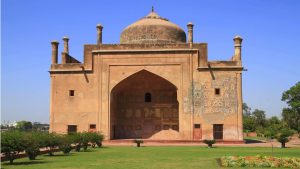
- Overview: Chini Ka Rauza is a tomb dedicated to Allama Afzal Khan, a Persian scholar and the prime minister during Emperor Shah Jahan’s reign. Located on the banks of the Yamuna River, it is known for its blue ceramic tiles.
- Features: The tomb is decorated with intricate tile work, a distinctive feature of the building. It has a Persian architectural influence, with a central dome and a small courtyard.
- Significance: The tile work of Chini Ka Rauza is unique and offers a different aesthetic from the typical Mughal monuments in Agra. It is a significant piece of Agra's architectural heritage.