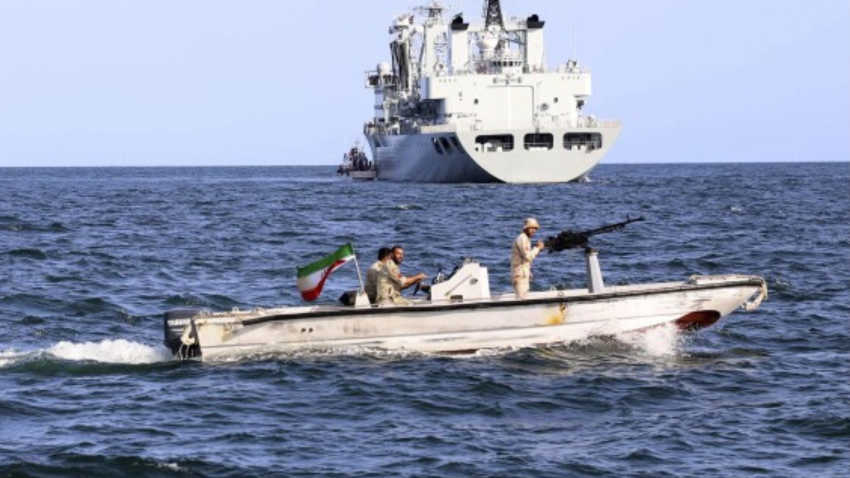
Warships from
China, Russia, and Iran have launched their annual joint naval exercises in the Gulf of Oman. The drills, named "Security Belt-2025," began on Monday near Iran’s strategic port of Chabahar. This marks the fifth time since 2019 that these nations have conducted joint exercises. According to Russian military sources, the drills aim to combat piracy and protect maritime trade routes.
A Strategic Show of Strength
Although these exercises focus on regional security, their timing carries a deeper message. The United States, under President Donald Trump, has been redefining its role in global security and shifting its alliances. As Washington reassesses its commitments, China, Russia, and Iran are strengthening their military cooperation. These exercises serve as a powerful display of their growing unity, positioning them as a counterbalance to US influence.
Tactical Drills and Military Assets
According to CNN, the drills include various military maneuvers such as simulated attacks on maritime targets, visit-board-search-seizure operations, and search-and-rescue missions. Russia’s defense ministry confirmed that 15 combat ships, support vessels, and gunboats, along with helicopters, are participating. China has deployed the Type 052D guided-missile destroyer Baotou and the supply ship Gaoyouhu. Meanwhile, Iran has sent a stealth missile corvette and a patrol ship.
Growing Geopolitical Alliances
While officials claim these exercises promote regional security, analysts see them as a strategic move to challenge Western influence. CNN reports that China, Russia, and Iran—three authoritarian governments—are aligning their military efforts to oppose the Western-led world order. The significance of this year’s drills is amplified by Trump’s shifting foreign policy, which includes a softer stance on Russia and demands for US allies in Asia to take on greater defense responsibilities.
Trump’s Gamble on Russia
President Trump has made efforts to build closer ties with Russian leader Vladimir Putin. According to an analysis by The Wall Street Journal’s Yaroslav Trofimov, Trump aims to drive a wedge between Russia and China to reshape global power dynamics in Washington’s favor. However, China and Russia remain firm in their partnership.
On February 24, 2025, Chinese President Xi Jinping reaffirmed his “no limits” partnership with Putin during a phone call marking the third anniversary of Russia’s full-scale invasion of Ukraine. Their conversation emphasized the strength of their ties and rejected external attempts to divide them.
Foreign policy experts compare Trump’s strategy to a “reverse Nixon.” In the 1970s, President Richard Nixon and his adviser Henry Kissinger used tensions between China and the Soviet Union to bring China closer to the US. Today, however, Russia and China are deeply connected through military, economic, and diplomatic ties. China supplies Russia with essential industrial components, while Russia has strengthened alliances with Iran and North Korea. North Korea has even reportedly sent troops to assist Russia in its war against Ukraine.
Risks of Trump’s Strategy
Trump’s shift toward Russia has alarmed European allies, who form the US’s largest trading bloc and key security partners. His approach also risks damaging relations with Asian allies, potentially weakening US efforts to counter China’s influence.
A Kremlin briefing memo cited by Trofimov suggests that Moscow has considered making concessions to the US. These could include reducing military ties with China, limiting China’s role in Russian infrastructure projects, and cutting natural gas exports to Europe to benefit US liquefied natural gas sales. There were even discussions about allowing American firms access to resource-rich areas in Russian-occupied Ukraine.
For China, Trump’s outreach to Russia presents both a risk and an opportunity. While Beijing is cautious about Moscow shifting loyalty, it sees benefits in a weakened transatlantic alliance. If the US-Europe relationship fractures, China could solidify its support for Russia while eroding US influence in Europe.
US Downplays Threat Despite Warnings
Despite growing military coordination between these three nations, President Trump has dismissed concerns. When asked about the naval drills on Air Force One, he reportedly told Fox News that the US remains stronger than all three countries combined. However, many in Washington remain wary. CNN reports that lawmakers describe this alliance as an “axis of authoritarianism,” warning that its cooperation extends beyond naval drills to economic and cyber warfare.
Trump’s approach to global politics has further unsettled US allies. His direct engagement with Putin, while sidelining European partners, has been seen as a weakening of transatlantic unity. Meanwhile, North Korea has also strengthened ties with Russia, signing a mutual defense agreement and sending troops to Ukraine.
Iran’s Role in the Equation
The timing of these naval exercises is crucial, given escalating tensions between the US and Iran. According to
The Times of Israel, Trump has reinstated his “maximum pressure” campaign against Tehran. His administration aims to cut Iran’s oil exports and restrict its nuclear program. In response, Iran has strengthened military ties with both Moscow and Beijing.
Iranian state media describes the joint naval drills as an effort to “enhance regional security and expand multilateral cooperation.” Iran has conducted similar exercises before, viewing them as a way to reinforce strategic alliances and resist US sanctions. The presence of Iranian Revolutionary Guards' warships in the drills further highlights Tehran’s commitment to a more aggressive military posture.
The Gulf of Oman: A Strategic Location
The Gulf of Oman is a key maritime route, making it a significant location for these exercises. According to
The South China Morning Post, this region serves as the gateway to the Strait of Hormuz, through which over 25% of the world’s seaborne oil trade passes. The US Fifth Fleet, stationed in Bahrain, monitors security in these waters.
By holding naval drills here, China, Russia, and Iran send a direct message to the US and its allies. Their presence demonstrates both military strength and a warning that they can influence global trade routes. This becomes even more critical as Washington reevaluates its role in West Asia under Trump’s foreign policy shifts.
Global Consequences of This Alliance
The strengthening military cooperation between China, Russia, and Iran has broader implications. Traditionally, the US has relied on NATO and alliances in the Indo-Pacific for security. However, as Trump pushes allies to take on more financial burdens and adjusts long-standing commitments, rival powers are seizing the opportunity to fill any perceived gaps.
If this partnership expands beyond the Middle East into areas like the South China Sea, Eastern Europe, or Latin America, it could create significant strategic challenges for Washington. Some experts believe this alliance is part of a broader geopolitical shift, where authoritarian nations work together to challenge Western dominance. CNN notes that their growing cooperation could reshape the global balance of power.
A New Global Order?
With China, Russia, and Iran drawing closer, the world may be witnessing the emergence of a new geopolitical axis. The question remains: can President Trump counter this shift and maintain US influence in an evolving world order?