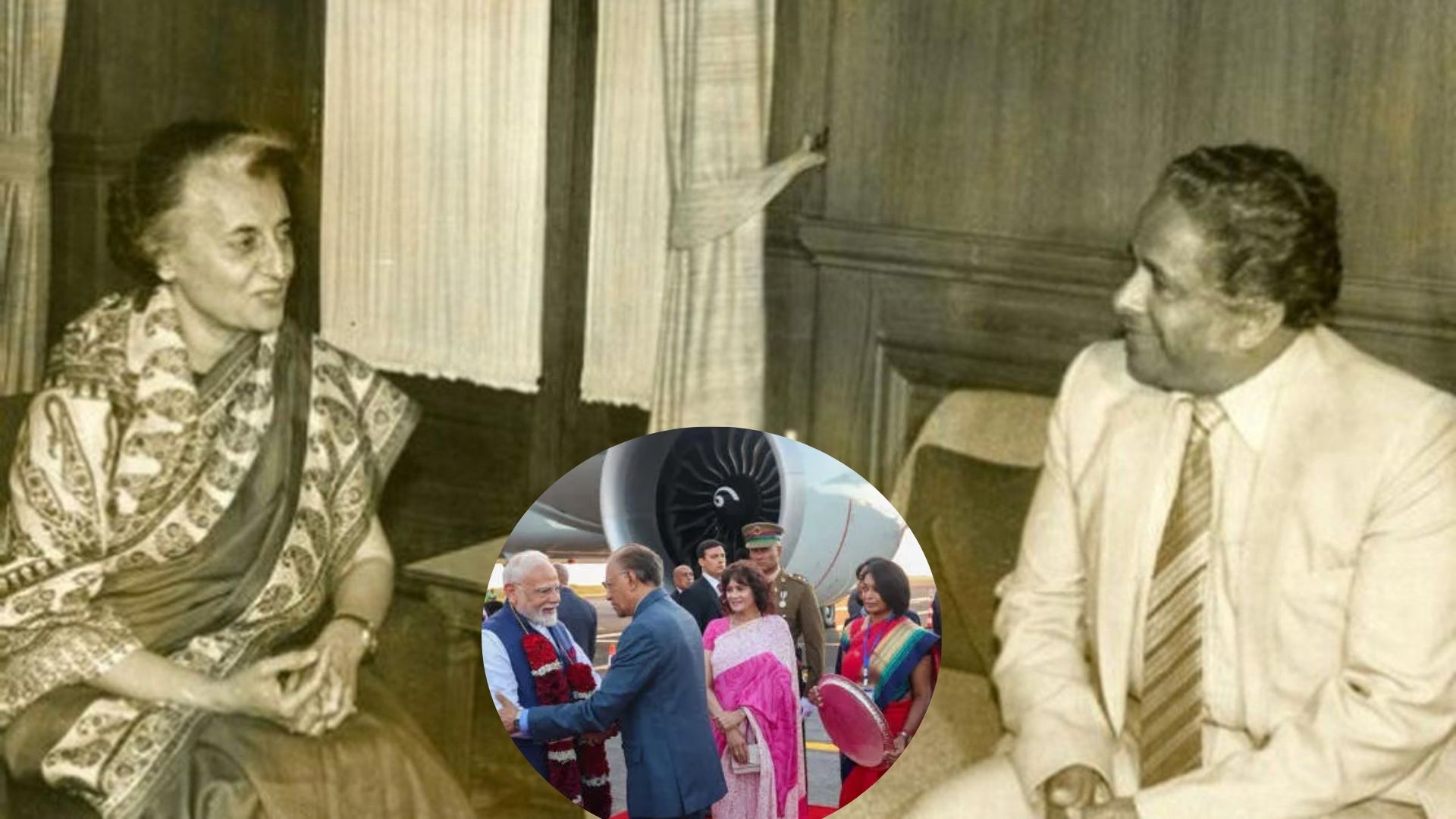
Prime Minister Narendra Modi arrived in Mauritius on March 11 for a two-day visit. His trip coincides with the island nation's national day celebrations. He is attending the event as the chief guest at the invitation of Mauritian Prime Minister Navin Ramgoolam.
The Indian community in Mauritius gives a warm welcome to PM Modi. "
Deeply touched by the warm welcome from the Indian community in Mauritius. Their strong connection to Indian heritage, culture and values is truly inspiring. This bond of history and heart continues to thrive across generations," he posted on X (formerly Twitter).
Let's have a look on the history of India-Mauritius Relations
The Forgotten Chapter: India’s Near Military Intervention in Mauritius (1983)
India and Mauritius share strong diplomatic ties today. However, in 1983, India nearly launched a military operation to prevent a coup. This secret mission, known as Operation Lal Dora, remains one of India’s most classified events.
Background of the Conflict
Tensions began in 1974 when India and Mauritius signed a defense agreement. India replaced the UK as Mauritius’ security guarantor, leading to close cooperation between their security forces. However, by 1983, political instability had escalated.
In 1982, the Mauritian Militant Movement (MMM) and the Mauritian Socialist Party (PSM) coalition won a major victory over the Labour Party, which had Indian support. Soon after, the coalition split. Paul Bérenger led the MMM, while Prime Minister Anerood Jugnauth formed the MSM party.
According to former Mauritian foreign secretary Vijay Makhan, "The local political context just imploded as the MMM broke up."
Bérenger’s pro-Soviet stance and ties with Libya’s Muammar Gaddafi worried Indian policymakers. They feared his leadership would favor Creole and Muslim minorities, possibly triggering a Hindu refugee crisis.
Jugnauth warned India about a possible MMM-led coup. Seeking support, he visited Indian Prime Minister Indira Gandhi in February 1983. She assured him that the Indian Air Force could reach Mauritius within five hours if needed.
India's Secret Plan for Military Action
Indira Gandhi approved a contingency plan under Operation Lal Dora. The Indian Army’s 54th Battalion was prepared to intervene if Bérenger attempted a coup. The Indian Navy planned to deploy six destroyers with Alouette helicopters and MK 42C Sea Kings.
Gandhi ordered the army and navy to coordinate for a potential landing in Port Louis, Mauritius’ capital. However, conflicts arose over operational control. The 54th Battalion marched to Mumbai without informing the navy and attempted to board the INS Mysore. This created confusion.
The plan collapsed when India’s intentions leaked to the U.S. Embassy. India then abandoned the military intervention and opted for a covert intelligence operation.
How India Avoided Direct Military Action
Indira Gandhi changed tactics and assigned the Research and Analysis Wing (RAW) to influence Mauritius’ political landscape. RAW Chief Nowsher F. Suntook traveled to Port Louis. Along with Indian High Commissioner Prem Singh, he worked to unite anti-MMM forces.
Their efforts succeeded. The MSM won the 1983 elections, and Jugnauth remained in power for over a decade.
The Aftermath and India’s Official Stance
India has never officially acknowledged plans for military intervention.
A retired intelligence official told
The Hindu, "The matter remains highly classified to this day. But it was a huge success. As a result, Jugnauth stayed on as PM for more than ten years. We produced this outcome by political means."
After the crisis, Jugnauth requested an Indian National Security Adviser. India sent General J.N. Tamini, who remained in Mauritius for years, further strengthening India’s influence.
While Operation Lal Dora never became a full military intervention, it played a crucial role in shaping India-Mauritius relations. India successfully handled the crisis through strategic diplomacy and intelligence, reinforcing its presence in the Indian Ocean. Today, India and Mauritius share strong ties built on history, trust, and cooperation.