
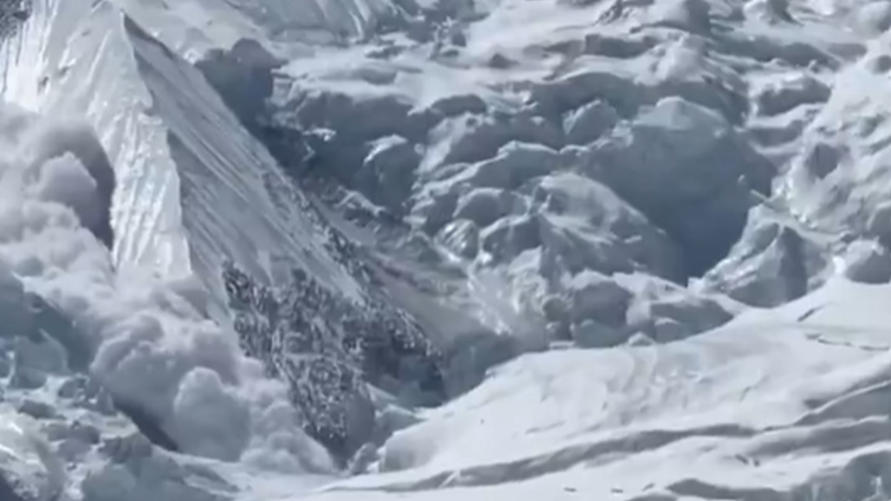

A massive avalanche hit Mount Annapurna in Nepal on Monday, sweeping away two Nepali climbers. Rescue teams launched a search operation on Tuesday to find them.
Climbers Caught During Early Season Ascent
The avalanche struck around midday, while three climbers from Seven Summit Treks were working on the mountain. They were transporting oxygen cylinders for other climbers who plan to make summit attempts later this spring. This climb marked the first ascent of the season.
Suddenly, large blocks of snow came crashing down the slopes. The avalanche hit all three men. Two of them—Ngima Tashi and Rima Rinje—were carried away by the force of the snow. One climber managed to stay safe. Both missing men worked for Seven Summit Treks, a leading expedition company in Nepal.
Rescue Efforts Underwa
Soon after the incident, the expedition company began rescue operations. Helicopters joined the search. “Our focus is on search and rescue... helicopters have also been deployed,” said Thaneswar Guragai, a manager at Seven Summit Treks. The company also posted a message on social media to show their commitment to the mission: "We'll do our best to locate and rescue our men."
🙏🙏🙏
— Seven Summit Treks 🇳🇵 (@sst8848) April 7, 2025
A huge avalanche swept down from above Camp II (+ 5600meters) at around 12 PM (Nepal time) today on Annapurna and we suffered a terrible disaster. While ferrying oxygen cylinders for the summit push, 2 of our climbing Sherpas, Ngima Tashi and Rima Rinje were swept away.… pic.twitter.com/37LzIwBhnw
Annapurna’s Deadly Reputation
Mount Annapurna rises 8,091 meters (26,545 feet) above sea level. It is the 10th tallest mountain in the world. However, many climbers fear it more than Everest. Annapurna has steep slopes, dangerous icefalls, and frequent avalanches. These risks make it one of the deadliest peaks in the Himalayas.
Climbers Flock to Nepal in Spring
Every spring, hundreds of climbers from around the world come to Nepal. The weather during this season is usually calm. The warmer temperatures and lighter winds make it the best time to climb. Nepal is also home to eight of the world’s ten tallest mountains, including Everest and Annapurna. Still, the high Himalayas are never completely safe. Avalanches and landslides are common, especially in winter and early spring. Even the most experienced climbers face life-threatening conditions.
Climate Change Raises the Threat
Experts warn that climate change is making things worse. Scientists say burning fossil fuels is heating the planet. This warming also affects oceans and weather patterns. As a result, snow conditions become unstable, increasing the chances of deadly avalanches.