
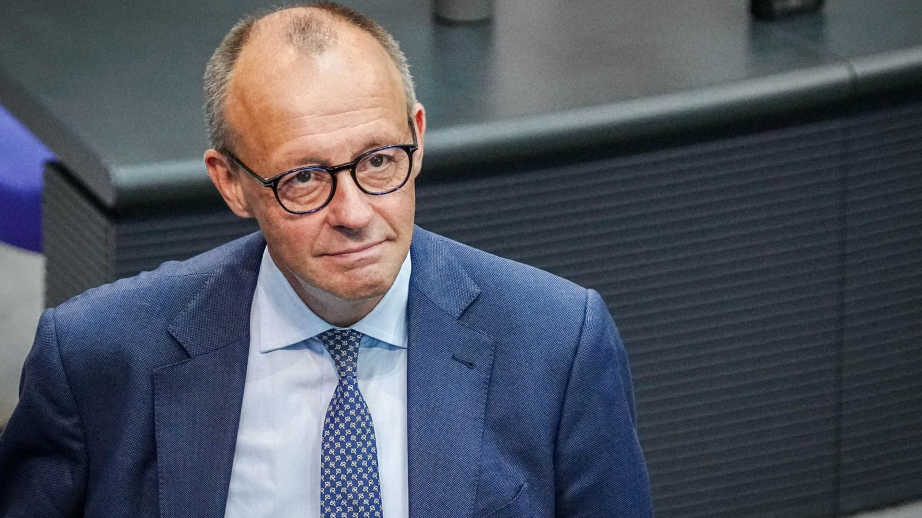

Friedrich Merz, the conservative leader of Germany, finalized a coalition agreement with the center-left SPD on Wednesday. According to reports, this deal came just 45 days after Merz’s party won a snap election. Consequently, the move addresses mounting pressure to form a strong government during global uncertainty.
Merz Promises Action
Merz declared, “We have a strong plan before us with which we can move our country forward again together.” He also added, “Germany is getting a government that is capable and strong.”
Unlike past coalition talks that dragged on for months, this agreement came swiftly. As a result, Merz is expected to take office as chancellor in early May.
A Message to Trump
At a press conference, Merz directly addressed Donald Trump in English. He promised to meet defense obligations and rebuild economic strength. AFP quoted him saying, “Germany is back on track.” Therefore, his remarks signal Germany’s readiness to lead again.
Responding to Global Challenges
The coalition deal arrives amid growing concerns. Trump’s 20% tariffs on EU goods threaten Germany’s exports. At the same time, Russian threats pushed Merz to call for increased military spending.
Previously, the country operated under a weak minority government. After Olaf Scholz’s three-party coalition collapsed in November, Merz quickly reached a deal with the SPD. Thus, the new coalition offers political stability.
Merz noted, “The coalition agreement is a signal of a new beginning… for our country.” His CDU/CSU alliance had won the election with 28.5% of the vote.
Boosting Defense and Backing Ukraine
In their 144-page plan, the coalition pledged to raise defense spending. Moreover, they promised to support Ukraine during its conflict with Russia. “We will provide comprehensive support to Ukraine so that it can effectively defend itself against the Russian aggressor and assert itself in negotiations,” the agreement stated.
Additionally, Merz promised reforms and investments. He said the government would work to make Germany safer and stronger. He assured, “Europe can rely on Germany.”
Crackdown on Irregular Migration
Migration was another key focus. Merz pledged to “largely end irregular migration” and announced a “repatriation offensive.” Since migration had become a heated campaign issue, these steps aimed to address public concerns.
Far-Right Surge Worries Analysts
The far-right AfD party came second in the election with 20%. Furthermore, a new Ipsos poll showed it leading with 25%, ahead of the CDU/CSU.
Renate Koecher, head of the Allensbach Institute, told Rheinische Post that Germany’s leadership crisis helped the AfD grow. She said, “Problems are growing but at the same time we have no government capable of acting.”
She also noted that Europe must react quickly to U.S. policies. “And in this situation, we have a power vacuum. This fuels the unease among the population,” she added.
Finally, Germany held elections on February 23. Scholz’s government had collapsed months earlier, on November 6 — the day Trump was re-elected.