
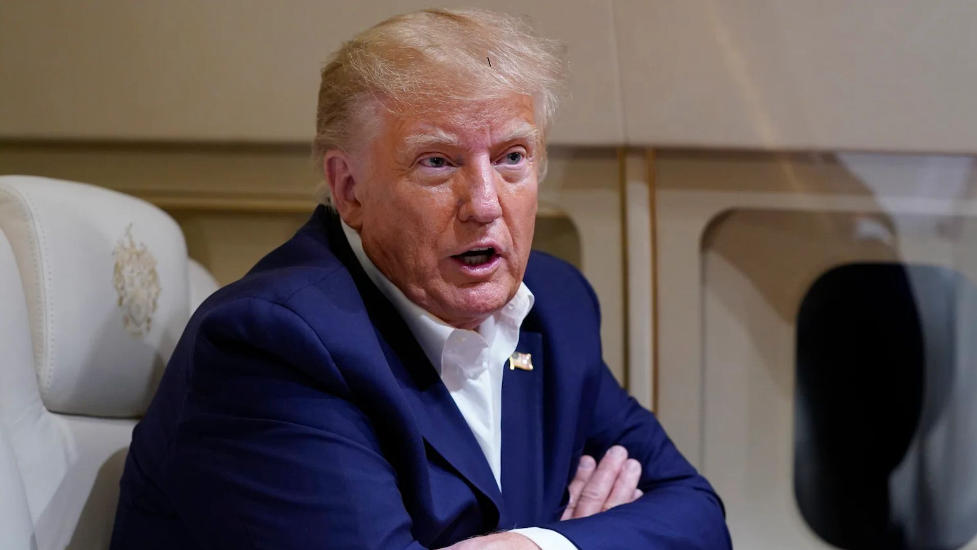

Leaders often shift their views after personal tragedy. For instance, Emperor Ashoka gave up violence after the brutal Kalinga war. However, US President Donald Trump took a very different path.
Despite Violence, Trump Refuses to Change
In 2024, Trump survived two assassination attempts. Moreover, he witnessed several mass shootings. One major incident happened on April 17 at Florida State University. Two people died, and six got injured.
Even so, Trump continued to defend gun rights. His critics found this strange. They expected him to reconsider. However, he didn’t.
Florida Shooting Triggers Fresh Debate
Meanwhile, another shooting intensified the gun debate. A 20-year-old student, Phoenix Ikner, opened fire at Florida State University. He killed two people and injured six others, including himself.
Notably, Ikner had white supremacist views. He got his guns through his mother, a local sheriff’s deputy. Therefore, people questioned how he passed background checks. Trump had earlier called such checks “too restrictive.”
As a result, the university shut down for two days. Police increased patrols across Florida. Survivors and families demanded change. However, Trump responded by blaming mental health. He said, “guns don’t kill people; people kill people.”
Trump Faces Gun Violence Firsthand
Earlier that year, on July 13, someone shot at Trump during a rally in Pennsylvania. The bullet grazed his ear. A bystander died. Later, on September 15, another man tried to attack Trump at his golf club. Secret Service agents stopped him.
Despite both incidents, Trump stood by his gun stance. He claimed guns could have stopped the attacks. He said, “If one patriot in that crowd had been carrying, Crooks would’ve been stopped before he pulled the trigger.”
Previously, Trump made a similar claim about the 2016 Pulse nightclub shooting. But at that event, an armed guard had already responded. The shooter still killed many.
Trump Uses Attacks to Boost His Campaign
Instead of backing off, Trump used the attacks to strengthen his political message. At the 2024 NRA convention, he said his survival proved his strength. He blamed “radical leftists who want to disarm America.”
Soon after, he launched the “Gun Owners for Trump” coalition. This group targeted conservative voters who feared losing gun rights. These voters usually skipped general elections. However, in 2024, they showed up in large numbers. At the same time, many Democrats stayed home.
History Shows Trump Flip-Flopped
After the 2018 Parkland school shooting, Trump promised reforms. But once the NRA objected, he dropped those ideas. Later, in 2024, he vowed to undo Biden’s rule that closed the “gun show loophole.” That rule required all sellers to perform background checks.
Furthermore, Trump accused Biden of trying to “confiscate weapons.” Yet Biden’s policies focused on banning assault weapons and supporting red-flag laws. Additionally, Trump repeated a false claim: “98% of mass shootings occur in gun-free zones.” This figure came from a flawed study, as fact-checkers explained.
Still, Trump used it to support arming teachers and allowing more people to carry guns.
Biden Took the Opposite Approach
Gun control marked a clear difference between Biden and Trump. Biden created the White House Office of Gun Violence Prevention. Kamala Harris led the team. Their goals included universal background checks, a red-flag law, and an assault weapons ban.
Harris stated that gun violence had become the leading cause of death among American children. She blamed weak laws for the problem.
In contrast, Trump said gun ownership protected freedom. For example, his supporters pointed to a case in Belize. A man tried to hijack a plane with a knife. A passenger with a gun shot him. Trump fans praised this act. However, critics said the real issue was poor security, not gun policy.
Rural Voters Backed Trump
Trump’s message resonated in rural and suburban areas. There, people saw guns as tools of self-defense and freedom. Even though the NRA had lost power, it endorsed Trump in 2024. That boosted his support.
However, critics noticed contradictions. Trump credited armed citizens for stopping violence. But his own life was saved by Secret Service agents, not civilians.
Also, Trump’s rejection of new gun laws after shootings raised concerns. Studies show that more guns often lead to more deaths and accidents.
Extremism and Easy Access Proved Dangerous
The Florida State shooter, Phoenix Ikner, showed the danger of guns in radical hands. He had extremist beliefs. Yet, he still got weapons legally.
Trump’s refusal to condemn far-right groups only made things worse. His opposition to tougher laws left gaps. Critics said those gaps allowed violence to grow.
Moreover, Trump often repeated misleading facts. These falsehoods confused the public. Instead of real solutions like safe storage laws, he pushed for more guns. This worsened the divide.
Trump Sticks to Guns as a Core Belief
Even after all the violence, Trump stayed loyal to the Second Amendment. He believed guns solved problems—not caused them. His campaign made this a central theme.
Meanwhile, America struggled. In 2023, about 47,000 people died from gun violence. That was 13.7 deaths per 100,000 people. The number dropped under Biden, but it was still high.
Now, with Trump back in office, the nation remains divided. On one side, people defend personal freedom. On the other, many worry about public safety. Trump stands at the heart of that conflict. He survived gun attacks—but refuses to see guns as a threat.