
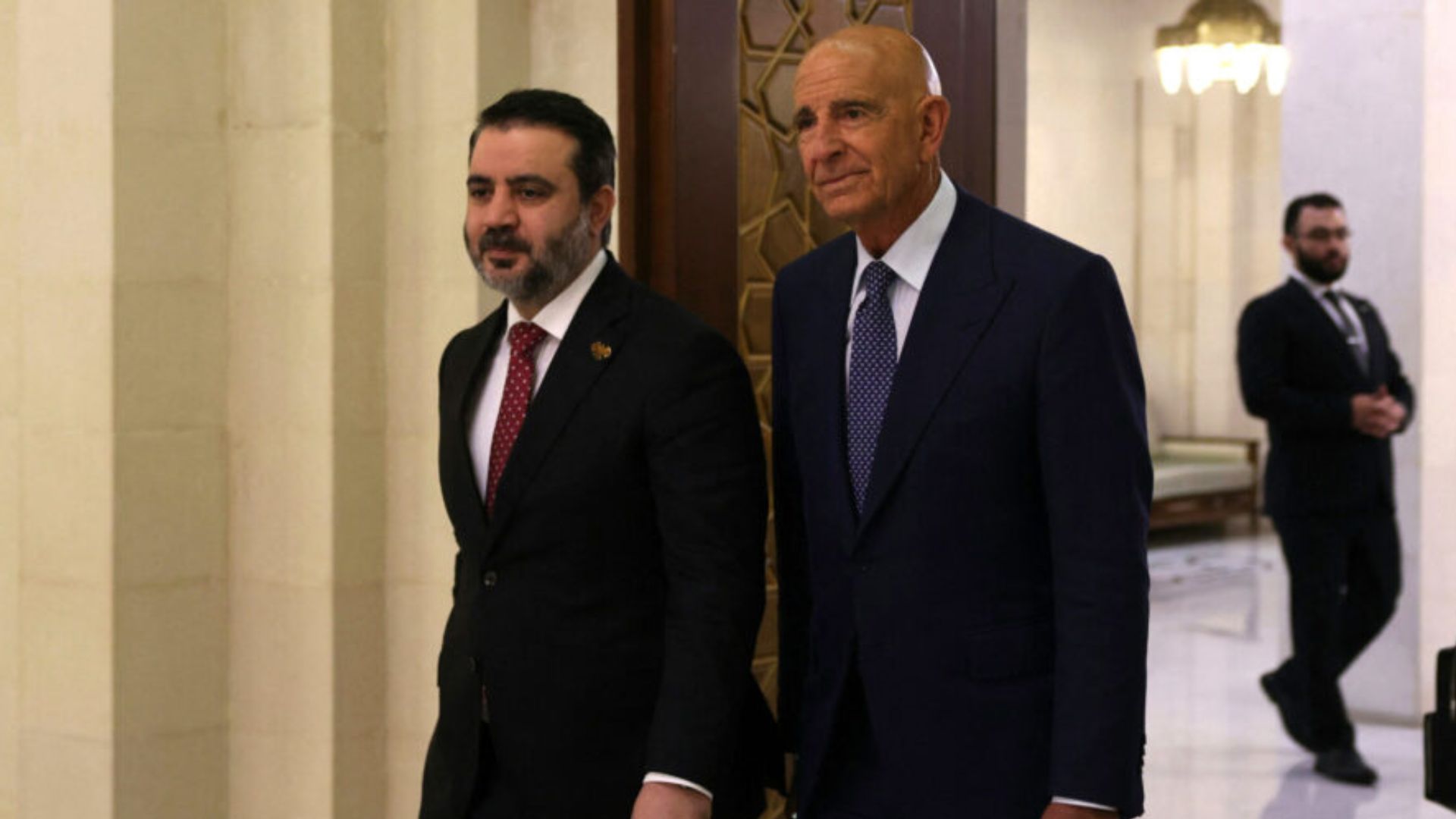

Israeli and Syrian officials held a rare meeting in Paris on Thursday. US special envoy Tom Barrack confirmed the meeting on social media. This marked the first public interaction between Israeli officials and Syria’s new government in Damascus. “I met this evening with the Syrians and Israelis in Paris. Our goal was dialogue and de-escalation, and we accomplished precisely that. All parties reiterated their commitment to continuing these efforts,” Barrack posted on X. However, both Syrian and Israeli governments have not officially confirmed the meeting.
Senior Officials Join the Dialogue
Though Barrack did not name the participants, a report by Axios revealed key figures. Israeli Strategic Affairs Minister Ron Dermer represented Israel. Syrian Foreign Minister Asaad al-Shaibani led the Syrian side.
This was the first known high-level meeting since 2000. At that time, US President Bill Clinton hosted Israeli PM Ehud Barak and Syrian FM Farouq al-Sharaa for peace talks in West Virginia.
Why the Meeting Matters Now
Recently, Israel and Syria have been engaging in indirect discussions. Yet, none of those talks had been confirmed publicly. The latest meeting comes after deadly clashes in Damascus and Sweida. Israel had carried out airstrikes in both places.
Saudi channel Al-Hadath reported that Turkey and the US are helping to mediate. An Israeli delegation may soon visit Baku, Azerbaijan, to finalize a new understanding with Syria.
Israel Lays Down Its Demands
Despite the talks, Israel continues its military operations in Syria. It demands a demilitarized zone along the border. It also wants to keep a permanent presence in the buffer zone taken after Bashar al-Assad’s fall last December.
Meanwhile, Israel is also preparing for further diplomatic moves. Dermer was scheduled to meet US Middle East envoy Steve Witkoff in Rome. However, the meeting might not happen since Israel and the US recalled their Gaza ceasefire negotiators from Doha.
Syria Turns to Turkey for Support
In response to recent violence, Syria asked Turkey to help strengthen its defense. Turkish officials said Syria requested training, advice, and help in fighting terror groups like ISIS.
Turkey agreed to provide technical assistance. This step may deepen Turkey’s role inside Syria. Turkish officials spoke anonymously due to government rules.
Druze Community at the Center of Tension
Earlier, Israeli PM Netanyahu met with Sheikh Muwaffaq Tarif, the Druze spiritual leader. The Druze are a small minority in Israel and often serve in the military. Israel said it intervened in Syria’s conflict to protect the Druze in Sweida.
Israel blamed Syria’s interim President Ahmed al-Sharaa for allowing Bedouin groups to attack Druze civilians. A ceasefire, negotiated by Washington, ended the week-long violence last Saturday.
US and Turkey React to Israel’s Strikes
The US was unhappy with Israel’s recent military actions. White House Press Secretary Karoline Leavitt said, “Trump was caught off guard by the Israeli strikes in Syria.” Several US officials anonymously told Axios they were frustrated with Netanyahu. They believed the strikes could destabilize Syria’s fragile new government.
Tom Barrack also criticized Israel, saying the timing of its strikes hurt regional peace efforts. Turkey also voiced concern. Turkish Foreign Minister Hakan Fidan said Israel wants to divide Syria. President Erdogan accused Israel of using the Druze issue as an excuse to expand its role in Syria.
Turkey Shifts Its Syria Strategy
In a major change, Turkey now supports Syria’s new leadership. It is even discussing a defense agreement with Damascus. This could allow Turkey to set up military bases inside Syria.
In April, Israel struck five cities in Syria, including near Hama where Turkey reportedly wants a military presence. Israel accused Turkey of building a “protectorate” in the region.
However, both sides later held talks to avoid future clashes. Reports said they reached an agreement on a “deconfliction mechanism” after a month of talks.
Long-Term Rivals Explore New Possibilities
For decades, Israel and Syria have been bitter rivals. They have fought in wars and opposed each other in several regional conflicts. Now, however, both sides appear to be testing the waters for peace. The meeting in Paris might be a small step but it could open a path to reduce tensions.