
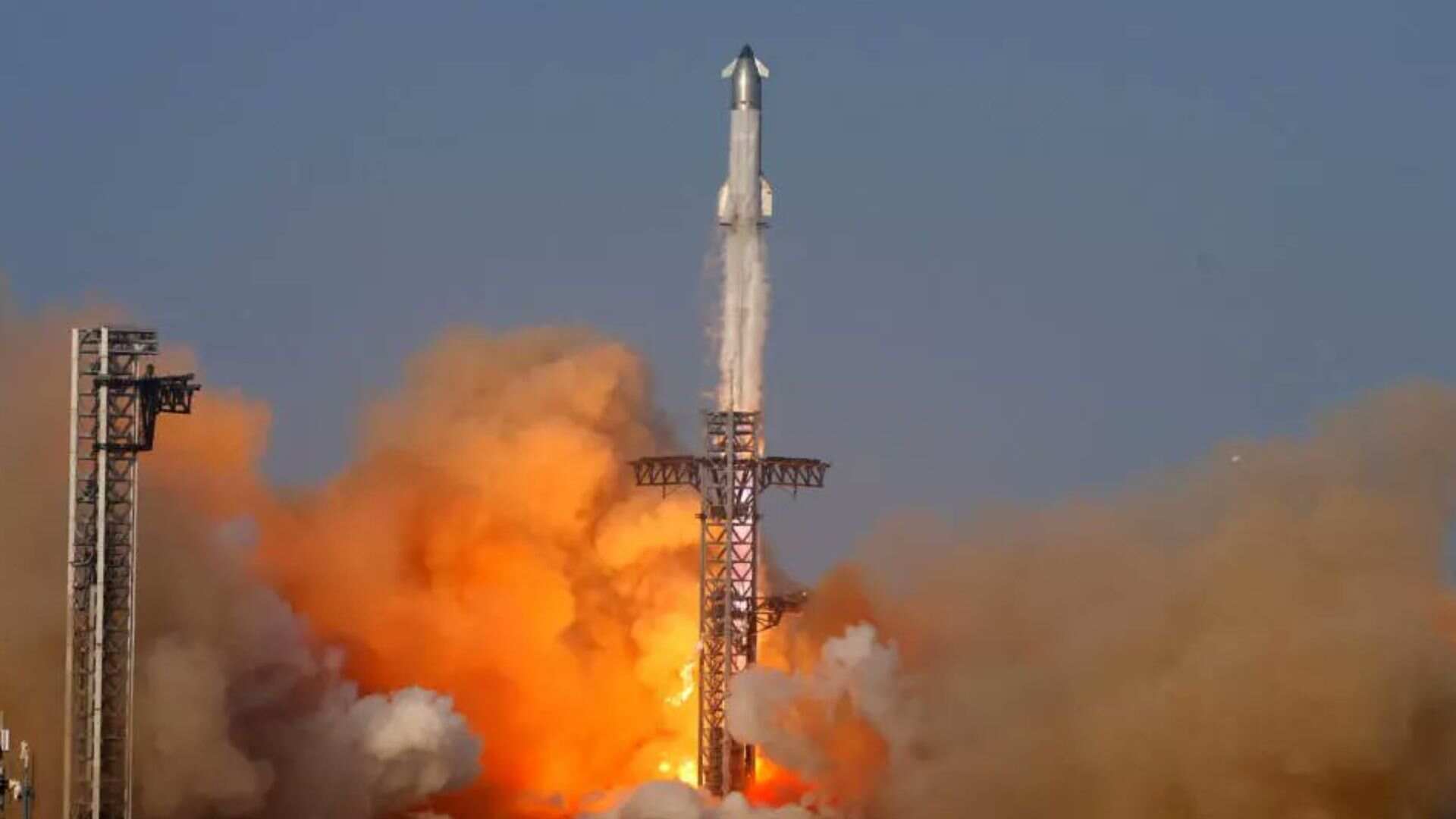

SpaceX launched Starship for its 10th test flight. The 403-foot (123-meter) rocket lifted off from Starbase in southern Texas at 6:30 pm local time on Tuesday evening. As the rocket soared, cheers erupted from engineers watching on a live webcast.
Central to big ambitions
Starship plays a vital role in Elon Musk’s plan to make humans a multiplanetary species. At the same time, NASA intends to use a modified version to land astronauts on the Moon.
Setbacks before launch
However, the launch did not happen easily. On Sunday, a fuel leak forced a delay. On Monday, poor weather pushed the attempt further. In addition, the pressure on SpaceX was high. The last three flights ended with explosions of the upper stage—two over the Caribbean and one in space. In June, another upper stage exploded during ground testing.
Dallas Kasaboski, a space analyst at Analysys Mason, explained the challenge. “We’ve had so many tests and it hasn’t proven itself reliable. The successes have not exceeded the failures.”
Goals of the test
For this flight, the upper stage was set to travel halfway around the globe before splashing down near northwestern Australia. It carried dummy Starlink satellites and experimental heat-shield tiles. Moreover, the path was meant to test its rear flaps under stress.
Meanwhile, the booster stage, called Super Heavy, landed in the Gulf of Mexico. This time, SpaceX did not try to catch it with the “chopstick arms.” Instead, it focused on collecting data about engine cutoffs.
Learning from failure
Nevertheless, analysts believe the program is not in crisis. SpaceX follows a “fail fast, learn fast” method. This approach already turned Falcon rockets, Dragon capsules, and Starlink satellites into major successes.
Yet Musk admits the challenges are tough. On Monday, he said, “What we’re trying to achieve here with Starship is to have a heat shield that can be flown immediately.”
The next big step
Looking ahead, SpaceX must still prove Starship can refuel in orbit. This step requires super-cooled propellant. Furthermore, it is essential for missions to Mars and deeper into space. However, it remains untested.