
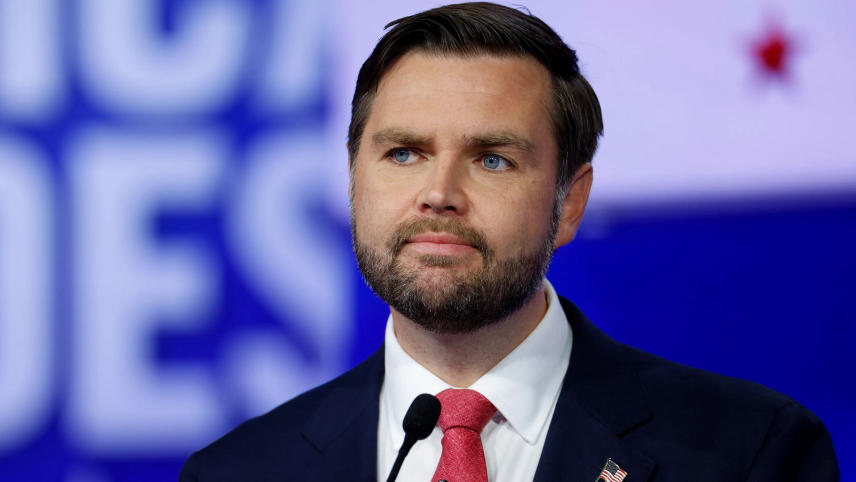

US Vice President JD Vance visited Minneapolis on Wednesday to comfort grieving families after last week’s deadly mass shooting. The visit, meant to show solidarity, quickly turned tense as protesters gathered outside, accusing him of offering sympathy without taking real action to address gun violence.
Mourning Turns to Protest
The tragedy unfolded at Annunciation Catholic Church, where two children were killed and 21 others were wounded when a gunman opened fire during a school Mass. Inside the church, Vance prayed with families and listened to heartbreaking stories about the young victims. He later described the conversations as deeply moving, saying, “I have never had a day that will stay with me like this one. We should talk less about the shooter and more about these kids. Their lives were cut short, and that should be the focus.”
However, outside the church, emotions ran high. Protesters chanted “do better” and “you’re a coward” while waving pride flags and holding signs that read “protect kids, not guns.” Their anger reflected frustration over repeated tragedies involving firearms and the lack of meaningful reform.
Details of the Shooting
Authorities confirmed that the shooter, 23-year-old Robin Westman, used three legally purchased firearms during the attack. Investigators revealed that Westman had legally changed his name in 2019.
The fact that he passed background checks despite warning signs has reignited debate over gun laws and access to firearms.
Anger Over Political Inaction
For many protesters, grief was intertwined with anger. They questioned whether leaders like Vance were truly committed to preventing future attacks. Their chants and signs captured a nationwide sentiment: thoughts and prayers are not enough without stronger policies.
Conservative columnist Dustin Grage criticised the protests online, calling them “tone-deaf.” Still, many in Minneapolis saw the demonstrations as a demand for accountability rather than political theatre.
Vance Calls for Prayer, Stops Short of New Gun Laws
Vance, a practising Catholic, urged Americans to pray for the victims still recovering in hospitals. He promised to push for policies targeting the “root causes” of violence but avoided supporting stricter gun control measures.
“One of the ways I’ll honour these parents is by being a better dad,” Vance said. “There are families who will never again get that chance.”
He framed the tragedy as a cultural and familial crisis rather than a failure of legislation — a message consistent with his stance since joining Donald Trump’s ticket.
Pattern of Public Hostility
The heated reception in Minneapolis was not Vance’s first encounter with public anger. Just two weeks earlier, he faced a hostile crowd at Washington, D.C.’s Union Station while delivering Shake Shack burgers to National Guard troops with Defense Secretary Pete Hegseth.
Hecklers shouted insults, including a crude reference to a viral false claim about his memoir, Hillbilly Elegy. The chants — “Go f** a couch, JD Vance!”* and “cryboy!” — echoed through the station and quickly spread online.
Vance dismissed the protesters as “crazy” and “privileged old white hippies,” while allies like White House deputy chief of staff Stephen Miller mocked the crowd on social media.
The Viral Rumour That Fueled Mockery
The “couch” insult originated from a false claim posted on X in July 2024. It alleged that Vance described a sexual encounter with a couch in his memoir. Although completely debunked, the rumour went viral after Democratic vice-presidential candidate Tim Walz joked about it during a rally.
By late July, Google searches for “JD Vance couch” had surpassed searches for “Trump shooting,” showing how viral ridicule can shape political narratives and intensify public hostility.
A Growing Divide
The confrontations in both Minneapolis and Washington highlighted a deepening divide between the Trump-Vance administration and the communities they visit.
In D.C., residents protested what they saw as increased militarisation of their city. In Minnesota, grieving families and activists demanded urgent action to protect children from gun violence.
Vance’s challenge now is to comfort victims while defending an administration reluctant to enact sweeping gun reforms. His call to “talk less about the shooter and more about these kids” resonated with some, but for protesters outside the church, words and prayers are no longer enough.
Their message was clear: protecting children requires more than condolences — it requires action.