
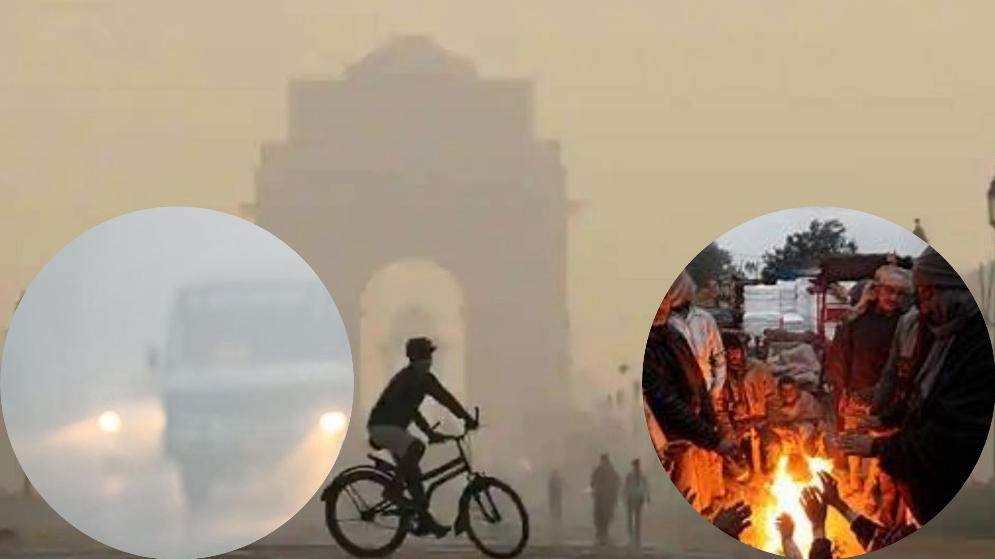

India stepped into the New Year under an intense winter spell, as large parts of the country faced cold wave conditions, dense fog, and sharply falling temperatures. National and regional reports from the India Meteorological Department (IMD) confirmed that the harsh weather pattern affected several regions, from the northern plains to the eastern and northeastern states.
While some cities experienced freezing temperatures and fog, others saw unusual weather events, including light rainfall.
Delhi Records Coldest December Day in Six Years
The national capital witnessed its coldest December day in six years on December 31. Daytime temperatures struggled to rise and remained well below normal levels, marking an unusually cold end to 2025.
Weather officials explained that “cold day” conditions occur when both daytime and night-time temperatures stay significantly lower than average. According to the IMD, this pattern is expected to continue into early January. Shallow fog also reduced visibility in many parts of Delhi during evening hours, affecting travel.
Jharkhand Shivers as Temperatures Drop to 4 Degrees Celsius
Eastern India remained under the grip of severe winter weather. In Jharkhand, the IMD issued dense fog warnings as visibility dropped to dangerously low levels in several districts.
Temperatures in some areas fell close to 4 degrees Celsius. Meteorologists said persistent north-westerly winds in the lower atmosphere were responsible for the sharp chill.
Schools Shut in Assam’s Guwahati
In the Northeast, Assam’s Guwahati saw a sharp fall in daytime temperatures, forcing authorities to order a week-long closure of schools to protect children’s health, PTI reported.
Cloudy skies, intermittent drizzle, and cold winds made conditions difficult for residents. Many people relied on wood fires and heavy winter clothing to stay warm.
Mumbai Sees Light New Year Showers
Mumbai witnessed a different weather pattern on the first day of 2026. Early morning light showers were reported in areas such as Walkeshwar and Lower Parel.
According to ANI, the rainfall helped bring down pollution levels in the city.
Rajasthan Records Single-Digit Temperatures
Rajasthan continued to face intense night-time cold. Karauli emerged as the coldest location in the state, with temperatures dropping close to the season’s lowest levels, PTI reported.
Several towns in eastern and northern Rajasthan recorded single-digit minimum temperatures. Jaipur and Jodhpur also experienced colder-than-usual nights. The IMD warned that dense to very dense fog is likely to cover large parts of northern, western, and eastern Rajasthan between January 1 and 3, which could disrupt road and rail travel.
Punjab Residents Stay Indoors Amid Biting Cold
Cold conditions tightened their grip across Punjab, where winter nights remained severe. Several cities recorded temperatures in the mid-single digits, forcing residents to stay indoors during early mornings and late nights, PTI said.
Cities such as Amritsar, Ludhiana, and Patiala experienced chilly starts to the day. Areas like Gurdaspur and Faridkot reported even lower minimum temperatures. Chandigarh also felt the cold, reflecting similar conditions in nearby parts of Haryana, including Rohtak and Narnaul.
Darjeeling Sees Snowfall, Fog Across West Bengal
West Bengal experienced widespread cold, especially in its sub-Himalayan regions. Temperatures dropped further in higher areas, with light rain or snowfall forecast in places like Darjeeling.
The IMD said fog is likely to persist across the state during morning hours for several days.
IMD Warns of Continued Cold Wave
On a national level, the IMD warned that dense to very dense fog, cold wave conditions, and “cold days” are likely to affect states such as Punjab, Haryana, Uttar Pradesh, Rajasthan, Bihar, and parts of central and eastern India in the coming days.
Although minimum temperatures may rise briefly, another drop is expected as cold northerly winds strengthen across the northern plains.
As winter deepens, authorities have urged people to remain cautious, especially while travelling during early morning and late-night hours.