
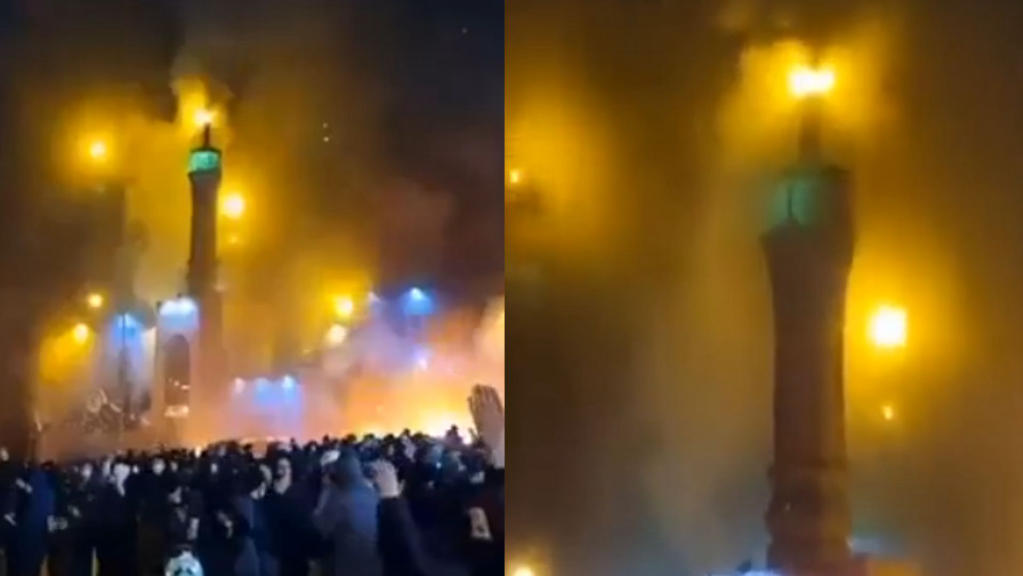

Iran is witnessing its biggest wave of protests in nearly three years. A viral video showing one of the country’s largest mosques on fire has intensified global attention. In the footage, protesters can be heard chanting slogans against the ruling system.
Iranian human rights activist Masih Alinejad shared the video on social media. She described the moment as a powerful symbol of long-suppressed anger.
“One of Iran’s biggest mosques burned during uprising. Don’t panic. This isn’t chaos. It’s 47 years of rage. For 47 years, after every Allahu Akbar from these minarets, innocent Iranians were executed by an Islamist regime,” she said in a post on X.
One of Iran’s biggest mosques burned during uprising.
— Masih Alinejad 🏳️ (@AlinejadMasih) January 10, 2026
Don’t panic. This isn’t chaos.
It’s 47 years of rage.
For 47 years, after every Allahu Akbar from these minarets, innocent Iranians were executed by an Islamist regime. pic.twitter.com/oHtMpPjHQA
(Disclaimer: The authenticity of the video has not been yet confirmed.)
Protests Mark Largest Unrest in Three Years
The unrest has spread rapidly across Iran. Activists say the demonstrations reflect deep public frustration built up over decades. Protesters blame political repression, executions, and economic collapse for the growing anger.
Observers say this is the most significant protest movement since nationwide demonstrations rocked the country three years ago.
Khamenei Condemns Protesters in First Response
Supreme Leader Ayatollah Ali Khamenei responded publicly for the first time since the protests escalated on January 3. He strongly criticized those taking part.
In a speech broadcast on state television, Khamenei labeled protesters as “vandals” and “saboteurs.” He accused them of trying to weaken the Islamic Republic.
Khamenei Attacks Trump and the United States
During the same speech, Khamenei turned his focus toward the United States. He accused US President Donald Trump of being responsible for Iranian deaths.
He said Trump’s hands “are stained with the blood of more than a thousand Iranians.” The comment appeared to reference Israel’s June conflict with Iran, which the US supported and later joined through its own strikes.
Khamenei also issued a warning about Trump’s future. He predicted that the US leader would be “overthrown,” comparing him to Iran’s former imperial rulers who fell during the 1979 revolution.
“Everyone knows the Islamic republic came to power with the blood of hundreds of thousands of honourable people, it will not back down in the face of saboteurs.”
Exiled Prince Calls for US Intervention
Meanwhile, Reza Pahlavi, Iran’s exiled crown prince, has taken a strong stance. He urged President Donald Trump to intervene in the unfolding uprising.
Pahlavi said the protests show that Iranians are ready to challenge the Islamic Republic directly. He called on world leaders to support the movement.
Second Wave Fueled by Economic Collapse
A fresh wave of protests erupted earlier this week. This followed Pahlavi’s call for citizens to raise their voices against the government.
Iran’s worsening economy has played a major role. Inflation has surged, and the national currency has sharply declined. The current protest movement began last month in Tehran’s Grand Bazaar. Shopkeepers led the demonstrations as they protested the rial’s rapid fall.
Since then, anger has spread from economic grievances to broader demands for political change.
Growing Pressure on Iran’s Ruling System
The combination of economic pain, political repression, and public defiance has put Iran’s leadership under intense pressure. With protests continuing and opposition figures speaking out, the situation remains volatile.
Many activists believe the movement reflects years of unresolved frustration—and say it is far from over.