
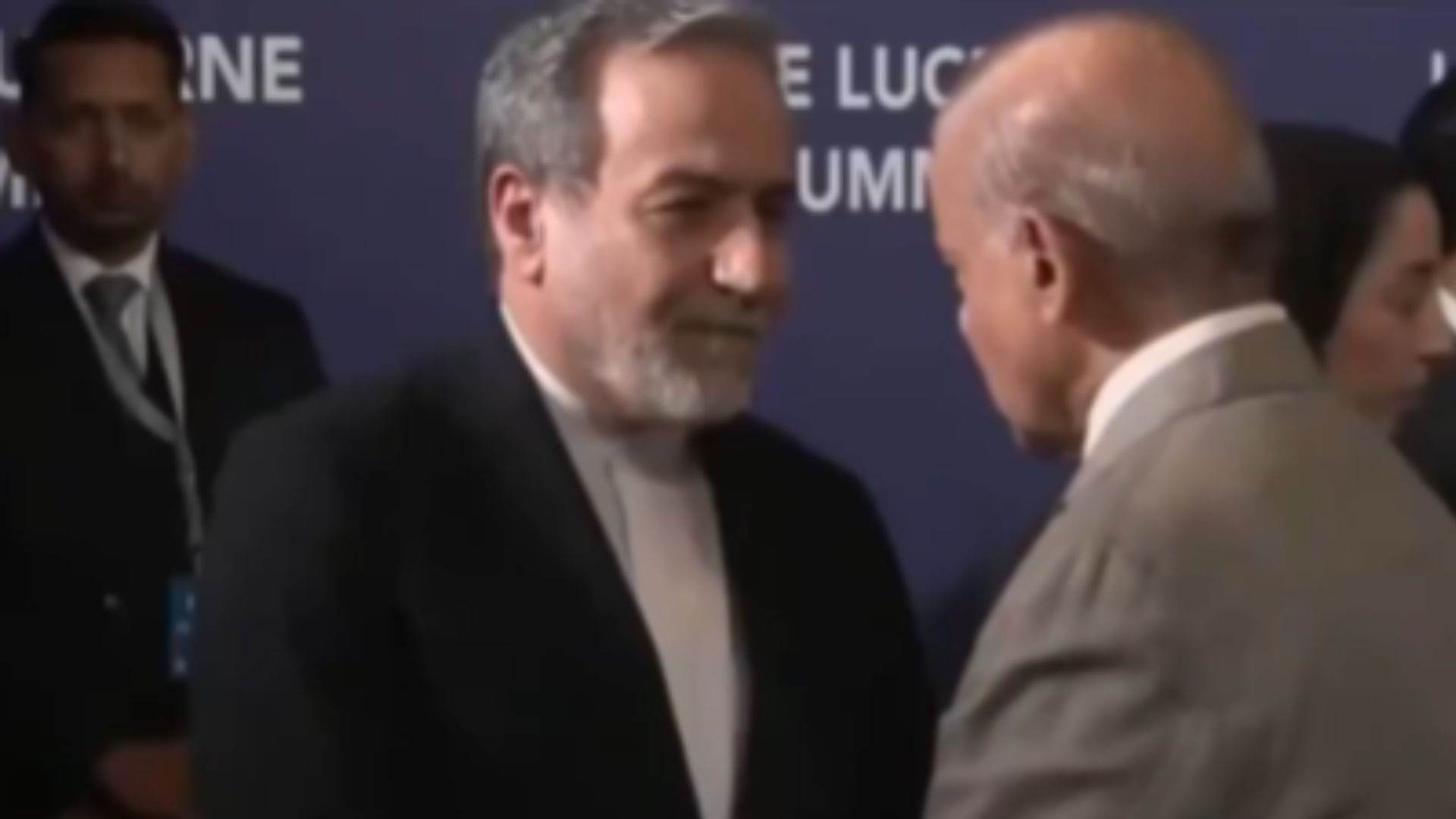

Senior officials from the United States and Iran began direct negotiations in Switzerland on Sunday as both sides sought to build on the fragile interim agreement signed last week to end the conflict between the two countries.
The talks, held at a mountain resort near Lake Lucerne, aim to transform the preliminary deal into a broader agreement covering Iran's nuclear program, regional security issues and the future of the Strait of Hormuz. However, ongoing tensions involving Israel and Hezbollah continue to threaten the diplomatic process.
Direct Talks Begin After Interim Agreement
US Vice President JD Vance met with Iran's top negotiators, including parliamentary speaker Mohammad Bagher Qalibaf and Foreign Minister Abbas Araghchi. Representatives from Pakistan and Qatar also attended as mediators.
Iranian officials largely avoided public appearances before the meeting. Shortly after Vance spoke briefly with reporters, Iranian state broadcaster IRIB confirmed that the four-party discussions had officially begun.
The negotiations follow an agreement signed last week that gave both countries 60 days to work out the details of a permanent arrangement with major implications for global security and energy markets.
Nuclear Program Remains Central Issue
Washington hopes to use the talks to secure commitments from Tehran regarding its nuclear activities. Before the negotiations started, Vance emphasized the importance of the moment.
“The question before us now is how much more can we accomplish together? Can we turn over a new leaf?” he said. He added, “Can we change relations in the Middle East permanently, or do we go back to doing things the old way, which is not our preference, but is certainly very much something that can happen.” The United States wants Iran to accept limits on its nuclear ambitions, while Iran continues to insist that its nuclear program serves peaceful purposes.
Iranian President Masoud Pezeshkian reaffirmed Tehran's position. “What is certain is that we will never back down from the right to enrich uranium, and the other side is also forced to accept it,” Pezeshkian said, according to Iranian state media.
Lebanon Conflict Threatens Progress
Despite the diplomatic breakthrough, renewed violence in Lebanon has complicated efforts to advance negotiations. The interim agreement called for an end to regional hostilities and for the Strait of Hormuz to remain open. However, fighting between Israel and the Iran-backed Hezbollah movement escalated only days after the deal was signed.
A ceasefire brokered on Saturday appeared to be holding on Sunday, but both sides remain cautious. Iranian Foreign Ministry spokesman Esmail Baghaei said Tehran's primary focus during the talks would be the conflict between Israel and Lebanon.
According to Baghaei, Iran wants implementation of the agreement to begin with the provision requiring an end to all ongoing conflicts, including the fighting involving Hezbollah. He also argued that the United States has been unable or unwilling to ensure Israel complies with the ceasefire.
Pakistan and Qatar Continue Mediation Efforts
Pakistan and Qatar have played key roles in facilitating communication between Washington and Tehran throughout the conflict. Before meeting Iranian officials, Vance held separate talks with Pakistani Prime Minister Shehbaz Sharif and Field Marshal Asim Munir, Pakistan's army chief and a major intermediary in previous negotiations.
“What’s up, man! Good to see you,” Vance said while greeting Munir. Sharif later met separately with Qalibaf and Araghchi. Qatari representatives also participated in discussions aimed at maintaining momentum toward a broader settlement.
International Nuclear Watchdog Monitoring Developments
The talks also attracted international attention. Rafael Grossi, head of the International Atomic Energy Agency (IAEA), met Swiss Foreign Minister Ignazio Cassis on the sidelines of the summit.
The IAEA previously monitored the 2015 nuclear agreement between Iran and the United States negotiated during the administration of former President Barack Obama. That agreement ended after President Donald Trump withdrew the United States from the deal in 2018.
Delayed Summit Finally Gets Underway
The meeting almost failed to take place. Vance was originally scheduled to arrive in Switzerland on Friday, but escalating violence in Lebanon prompted Iranian officials to cancel initial plans to attend. The talks were revived after renewed diplomatic efforts and a temporary ceasefire in Lebanon. Vance arrived in Switzerland accompanied by special envoy Steve Witkoff and Jared Kushner, Trump's son-in-law. Both had already begun working on technical aspects of the negotiations before the vice president's arrival. While Vance expects to remain in Switzerland for only a short period, Witkoff and Kushner are expected to lead much of the detailed bargaining process.
Deal Faces Political Criticism
The agreement has generated significant debate in the United States. Some Republican hardliners have criticized Trump and Vance for pursuing a deal with Tehran. Critics have compared the arrangement to the Obama-era nuclear agreement, which many Republicans argued failed to permanently halt Iran's nuclear program. Under the current framework, Iran can resume unrestricted oil sales and potentially regain access to billions of dollars in previously frozen assets. In return, Tehran is expected to dilute portions of its stockpile of highly enriched uranium.
The agreement also allows commercial ships to pass through the Strait of Hormuz without charges for 60 days, although future fees remain possible. Trump recently warned that if negotiations fail within the 60-day period, the United States could impose its own charges on shipping through the strategic waterway.
Markets Closely Watching Outcome
The negotiations have attracted significant attention from global markets. The White House has sought to reassure investors that the conflict's impact on oil prices will remain temporary.
Following the announcement of the interim agreement, oil futures dropped nearly 8%, reflecting optimism that disruptions to energy supplies could be avoided. However, continued uncertainty surrounding Lebanon, Hezbollah and the Strait of Hormuz means financial markets are expected to closely monitor every stage of the negotiations.
Major Challenges Still Ahead
Although the launch of direct talks marks a significant diplomatic milestone, major obstacles remain. Neither Israel nor Hezbollah signed the US-Iran agreement, and both sides continue to maintain hardline positions. Israeli Prime Minister Benjamin Netanyahu has vowed to keep Israeli forces in southern Lebanon until all security threats are eliminated, while Hezbollah insists it will continue resisting unless Israeli troops withdraw.
In the days following the agreement, clashes reportedly killed 47 people in Lebanon and five Israeli soldiers. As negotiations continue in Switzerland, diplomats hope the 60-day process can produce a lasting framework that addresses nuclear concerns, regional security and stability in one of the world's most strategically important regions.