
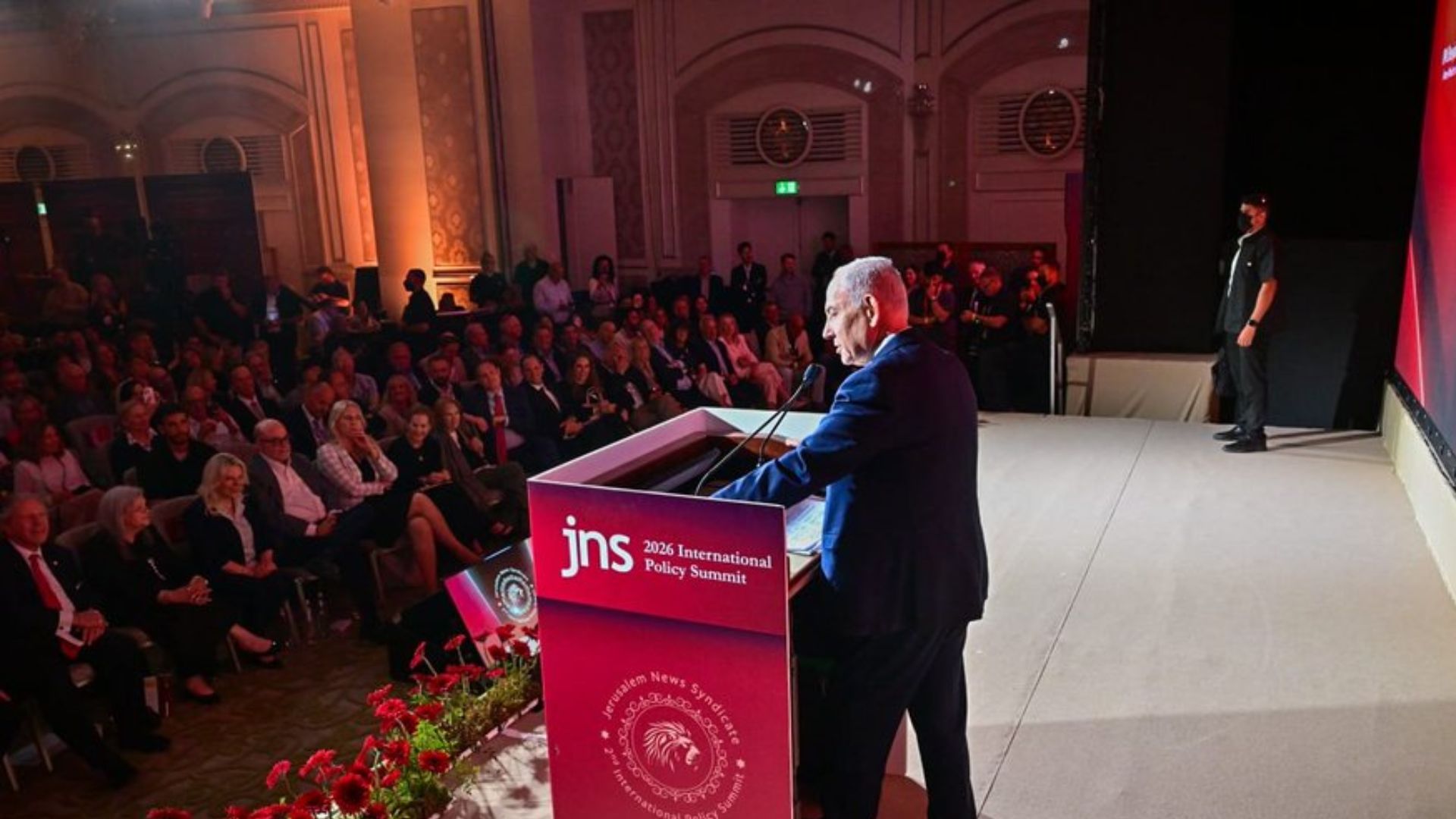

Israeli Prime Minister Benjamin Netanyahu delivered a wide-ranging speech at the JNS International Policy Summit 2026, where he defended Israel's recent military operations in Gaza, Lebanon, and Iran. He also reaffirmed his government's position that Iran must never be allowed to acquire a nuclear weapon.
Speaking before supporters, policymakers, and international guests, Netanyahu highlighted what he described as key security achievements over the past year. He argued that Israel's military actions had strengthened national security and altered the strategic landscape of the Middle East.
Prime Minister Benjamin Netanyahu's Remarks at the @JNS_org International Policy Summit 2026 #JNS26 “Thank you, Mark Levin. I wish I could use you as my advisor. Every day. You know, in the United States they say that President Trump does everything that I ask him to do, and in… pic.twitter.com/lMY021BKKQ
— Prime Minister of Israel (@IsraeliPM) June 21, 2026
Netanyahu Addresses Relationship With Trump
Netanyahu began by discussing his relationship with U.S. President Donald Trump. He rejected claims that either leader dictates the other's policies and stressed that both countries make decisions based on their own national interests. "We're leaders of independent and proud countries. We stand for our interests. I stand for the interests of Israel, and for its security." He added that Israel and the United States often share common goals but occasionally disagree on certain issues while maintaining close cooperation.
Defends Decisions on Gaza, Hezbollah and Iran
The Israeli prime minister said he faced criticism over several major military decisions, including operations in Rafah, strikes against Hezbollah, and actions targeting Iran.
According to Netanyahu, those operations addressed serious security threats facing Israel. "They told me not to enter Rafah. I entered Rafah. I was told not to strike Hezbollah. We struck Hezbollah. They told me not to confront Iran. We confronted Iran." He argued that these actions helped prevent future threats against Israel.
Focus on Iran's Nuclear Program
A significant part of the speech centered on Iran's nuclear activities. Netanyahu stated that Israeli and U.S. military operations targeted facilities, infrastructure, and personnel linked to Iran's nuclear and missile programs. "We destroyed Iran's nuclear infrastructure."
Netanyahu claimed the operations significantly damaged Iran's capabilities and reduced what he described as a major security threat to Israel.
Credits U.S.-Israel Cooperation
Netanyahu praised cooperation between Israel and the United States during military operations against Iran. He said the partnership helped target key military and strategic assets and increased pressure on Tehran. He also argued that the operations weakened Iran's regional influence and damaged important military infrastructure.
Highlights Operations Against Hamas and Hezbollah
The prime minister pointed to Israeli actions against Hamas and Hezbollah as another major achievement. He said Israel targeted senior leaders and military assets belonging to both groups. Netanyahu also stated that Israeli operations helped secure the return of all hostages held during the conflict. "We brought back to Israel every single hostage. Every last one of them."
Security Zones Will Remain in Place
Addressing the situation in Lebanon, Gaza, and Syria, Netanyahu said Israel intends to maintain security zones in areas it considers necessary for national defense. "As long as we need to protect our people, we will remain in the security zone in South Lebanon." He argued that every country has the right to take measures to protect its citizens from cross-border threats.
Israel's Security Doctrine Has Changed
Netanyahu said recent conflicts have led Israel to adopt a more proactive security strategy. According to him, the country will act against emerging threats before they become larger dangers. "We initiate. We attack. We surprise, he described this approach as a major shift in Israel's defense doctrine.
References to Family Legacy
The Israeli leader also reflected on the legacy of his brother, Yonatan Netanyahu, who was killed during the 1976 Entebbe hostage rescue mission. He said the operation demonstrated the importance of determination when facing security challenges.
Netanyahu also cited comments made by his father, Benzion Netanyahu, who warned about the threat posed by Iran and expressed confidence that Israel would overcome it.
Strong Message on Iran
Netanyahu delivered one of his strongest messages while discussing ongoing diplomatic efforts involving Iran. "No matter what happens in the talks, with an agreement, without an agreement, I pledge to you that Iran, as long as I am Prime Minister of Israel, will never have a nuclear weapon." The statement underscored Israel's long-standing opposition to Iran obtaining nuclear weapons.
Defends Israel's Military Conduct
Netanyahu also responded to criticism of Israel's military operations. He argued that the Israeli military takes extensive steps to reduce civilian casualties while targeting armed groups operating in populated areas. He maintained that Israel's conflicts are directed against militant organizations rather than civilian populations.
Calls for Action Against Antisemitism
Toward the end of his address, Netanyahu spoke about rising antisemitism around the world. He urged Jewish communities to challenge misinformation and defend their identity and values. "Stand up. Don't cower. Don't be afraid. Fight back," he encouraged supporters to speak against antisemitism and support Israel.
Netanyahu Reaffirms Security Priorities
Concluding his speech, Netanyahu reiterated his commitment to Israel's security and praised the country's military personnel. He said Israel would continue taking action against threats it considers dangerous to national security while maintaining its focus on protecting its citizens.
The speech served as a defense of Israel's recent military campaigns and a statement of the government's position on regional security, Iran's nuclear program, and Israel's future strategic priorities.