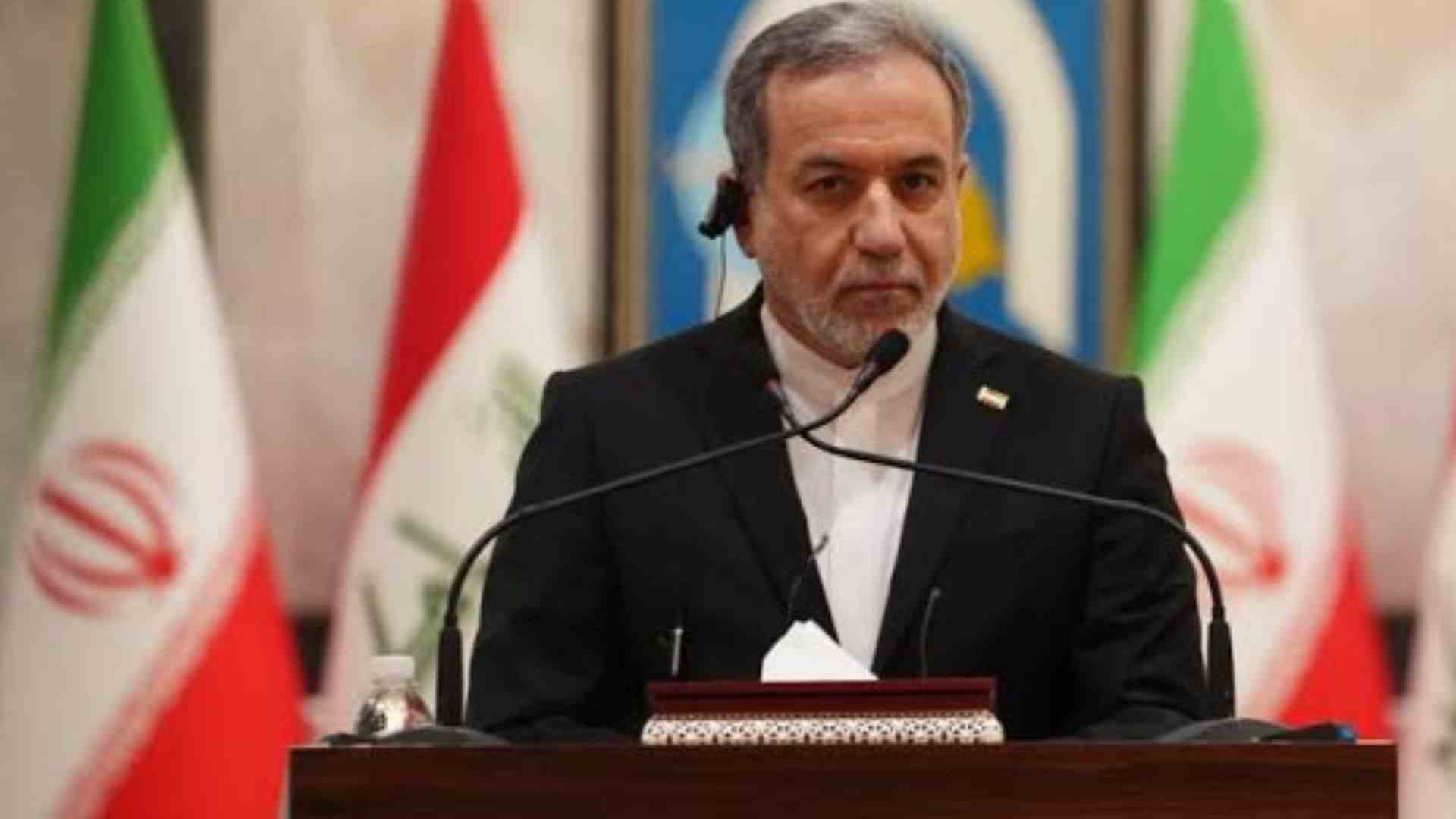
Iranian Foreign Minister Abbas Araghchi on Monday blamed the United States for rising tensions and insecurity in the Strait of Hormuz. He called for diplomatic efforts to resolve regional disputes. He also urged countries in the region to establish a joint security arrangement without foreign military involvement.
Speaking at a joint press conference with Russian Foreign Minister Sergei Lavrov, Araghchi said the conflict involving Iran, the US and Israel, along with the economic blockade, remained the main source of instability in the region.
"The war imposed by the United States and the Zionist regime (Israel), combined with the economic blockade, constitutes the principal source of insecurity in our region,"
AFP quoted Araghchi as saying.
“We welcome any initiative that leads to security from within without the presence of foreign forces, and consider it the right move,” he added.
Lavrov Visits Tehran Amid Regional Tensions
Meanwhile, Lavrov arrived in Tehran on Monday for his first visit to Iran since the West Asia war began. Moscow hopes to support diplomatic efforts and prevent the conflict from escalating further.
On Sunday, Iranian Foreign Ministry spokesperson Esmaeil Baqaei said Lavrov's visit would focus on "regional and international developments".
According to Russia's foreign ministry, Lavrov was scheduled to meet Iranian President Masoud Pezeshkian and hold talks with Araghchi.
Lavrov has said Moscow's diplomatic efforts are "aimed at preventing the return of a large-scale war". However, negotiations between Tehran and Washington remain stalled.
The visit follows a conversation between Russian President Vladimir Putin and Pezeshkian in early October. During that discussion, Putin told the Iranian president that Moscow was ready to support mediation efforts.
Russia and Iran Strengthen Cooperation
Russia and Iran have maintained close ties despite facing extensive international sanctions. Moreover, their military and economic cooperation has expanded since Russia launched its invasion of Ukraine in 2022.
Moscow's engagement with Tehran comes as tensions continue across West Asia and diplomatic efforts struggle to secure a lasting settlement.
Russia's foreign ministry said the talks in Tehran were expected to focus on "ways to resolve the acute international crisis triggered by the unlawful aggression of the US and Israel against Iran".
The ministry also warned that the conflict had damaged stability and security "not only in the near and Middle East, but also on a global scale".
Strait of Hormuz Remains a Major Flashpoint
The West Asia war began in February when the US and Israel launched strikes on Iran. Although the sides agreed to a ceasefire in April and later reached a memorandum of understanding in June, hostilities around the Strait of Hormuz have continued.
The strategic waterway plays a vital role in global energy trade. Under normal conditions, around one-fifth of the world's hydrocarbons pass through the strait. Therefore, any disruption to shipping could affect international energy supplies and markets.
Iran claims control over the waterway and regularly targets vessels that cross it without its authorisation. In response, Washington has maintained a naval counter-blockade targeting Iranian ports.
These opposing measures have kept maritime tensions high and raised concerns about regional stability and global energy security.
Against this backdrop, Araghchi called on regional countries to take greater responsibility for their own security and pursue arrangements without foreign military forces. Meanwhile, Russia continues to seek a diplomatic role as tensions persist and negotiations between Iran and the United States remain deadlocked.