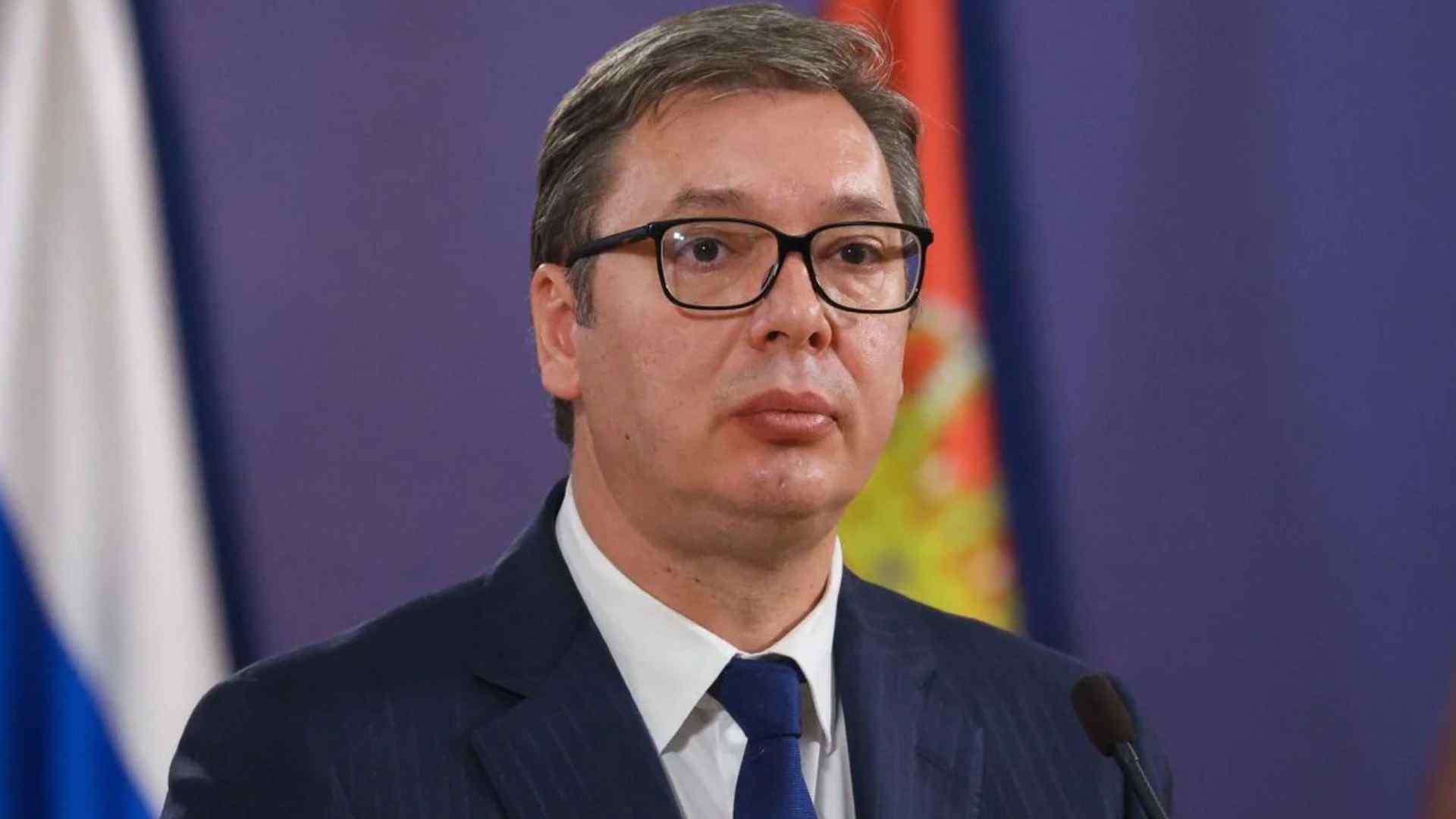
Serbia’s long-serving political leader Aleksandar Vučić has acknowledged defeat in a landmark election, potentially paving the way for a major change in the country’s political leadership. The election saw Vučić’s ruling Serbian Progressive Party (SNS) face a student-led
movement that had spent nearly two years protesting against his government and demanding political change.
Speaking to supporters at his party’s headquarters in Belgrade on Sunday, Vučić accepted that preliminary results showed a clear victory for the Student List, the political platform backed by the protest movement. However, he cautioned that the final results had not yet been confirmed.
“We still do not have final results,” Vučić told supporters at his party headquarters in Belgrade. “On the basis of a sample … it is clear that we have lost these elections, the Student List has won, they will have between 135 and 140 seats, and we will have 105.”
Preliminary estimates from polling organisations CESID and IPSPS indicated that the Student List could secure 138 seats in Serbia’s 250-member parliament. Vučić’s SNS was projected to win 104 seats, while parties representing ethnic national minorities were expected to take the remaining positions.
The results marked a major setback for Vučić, who had dominated Serbian politics for more than a decade. His admission of defeat triggered celebrations in Belgrade, where supporters of the student movement welcomed what appeared to be a historic electoral victory.
Historic Voter Turnout Marks a Turning Point
Celebrations broke out at the Student List’s headquarters as supporters cheered, embraced one another and expressed their excitement over the preliminary results. Chants of “Victory, victory!” filled the gathering as the movement appeared poised to secure a parliamentary majority.
Radomir Saičić, a professor at Belgrade University who spoke on behalf of the students, described the outcome as a moment when citizens had made their voices heard.
“Dear Serbia, tonight the voice of the people is being heard,” Saičić said at the students’ headquarters. “Tonight we celebrate victory, tomorrow we build the future.”
The celebrations followed an unusually high turnout, which became one of the defining features of the election. By 7 pm local time on Sunday, polling and monitoring organisations CeSID and Ipsos estimated that 67.6% of eligible voters had cast their ballots.
The turnout was reported to be the highest since the breakup of Yugoslavia in 1992, highlighting the level of public engagement in an election widely viewed as a contest over Serbia’s political future.
The strong participation also added to expectations of a major political shift, particularly as the student-led movement challenged a ruling party that had maintained a dominant position for years.
Uncertain Polls and the Rise of the Student Movement
Opinion polls conducted before the election had produced widely differing projections, making it difficult for analysts to predict the outcome with confidence.
The uncertainty reflected the unusual nature of the contest, in which a grassroots student movement confronted Vučić’s established political machinery. The Student List drew support from people seeking greater accountability and a change in the country’s political direction.
Despite the mixed polling estimates, the high voter turnout strengthened expectations that the opposition movement could perform better than anticipated.
The preliminary projections suggested that the Student List had gained enough support to emerge as the largest force in parliament, potentially giving it the numbers needed to reshape the country’s political landscape.
However, the final distribution of seats and the implications for government formation remained subject to the official results.
Vučić’s Defeat Raises Hopes for Democratic Change
The projected defeat represents a significant challenge to Vučić’s political dominance. During his years in power, critics increasingly accused him of adopting authoritarian practices and weakening democratic checks and balances.
The student-led protests had become a sustained challenge to his government, with demonstrators pressing for political accountability and broader institutional change.
The election result could therefore mark a turning point for Serbia, depending on whether the Student List can translate its projected parliamentary majority into a new governing arrangement and deliver on its promises.
Vučić’s setback has also drawn comparisons with the political defeat suffered by his ally Viktor Orbán in neighbouring Hungary six months earlier. Both developments have fuelled hopes among supporters of democratic reform that political change could gain momentum across Central Europe.
However, the longer-term consequences will depend on the new parliament’s composition, the formation of a government and the ability of the incoming political leadership to implement reforms.
Why Vučić Called a Snap Election
Facing growing pressure from the student movement, Vučić resigned the presidency last month and opted to call a snap election, taking a major political gamble. The decision brought forward a contest that placed his leadership and his party’s grip on power directly before voters.
The student movement’s projected victory suggests that the strategy may have backfired, turning an election intended to address political pressure into a serious setback for the ruling party.
For Serbia, the outcome could open a new chapter after more than a decade of Vučić’s political dominance. The immediate focus will now be on the final election results and whether the Student List can secure the parliamentary support needed to form a government.
The scale of the turnout and the movement’s projected success have already made the election a landmark moment in Serbia’s recent political history.