
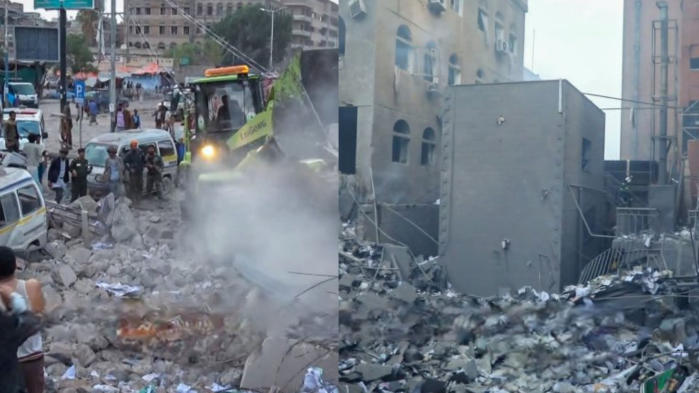

At least 35 people were killed and over 130 wounded after Israeli forces carried out multiple airstrikes on Yemen’s capital Sanaa and Jawf province on Wednesday, according to Houthi rebels.
“The number of martyrs and injured among citizens from the treacherous Zionist crime has risen to 35 martyrs and 131 wounded,” said Anees Alasbahi, the spokesman for the Houthi-run health ministry, on X. He added that the figures were not final and could rise further.
Israel Confirms Targeted Strikes
Israeli Defence Minister Israel Katz confirmed the attacks in a statement. “The IDF has just struck in Sanaa and other locations across Yemen, targeting military camps manned by Houthi terrorists, including the Houthi propaganda apparatus, as part of Operation ‘Ringing Bells,’” Katz announced.
Meanwhile, Houthi-run Al-Masirah TV reported that one of the strikes hit a government complex in the Al-Hazm district in northern Al Jawf Governorate.
Strike Follows Previous Attack on Houthi Leadership
This latest assault came less than two weeks after a similar Israeli air raid killed Houthi Prime Minister Ahmed al-Rahawi along with several senior officials.
According to a Houthi statement broadcast on Al-Masirah, the earlier strike hit during “a routine workshop held by the government to evaluate its activity and performance over the past year.”
The consecutive attacks highlight Israel’s intensifying campaign against Houthi leadership and infrastructure in Yemen.
Houthis Escalate Confrontation With Israel
The Houthis, who receive significant backing from Iran, have been escalating long-range confrontations with Israel. They claim their attacks are acts of solidarity with Palestinians in Gaza amid the ongoing conflict there.
Iran has also provided financial and military support to Hamas and Palestinian Islamic Jihad, both active in Gaza and heavily involved in fighting Israel.
Rising Regional Tensions
These strikes mark a dangerous escalation in the region. As Israel intensifies its military actions, the Houthis have vowed retaliation, further complicating the already volatile Middle East conflict involving Iran, Hamas, and Israel.
The situation remains tense, with fears that the violence could spread beyond Gaza and Yemen, drawing in more regional powers.