

Diwali celebrations have begun across India. The festival marks Lord Ram’s return to Ayodhya after defeating the demon king Ravan. As told in the Ramayan, Ram came back with his wife Sita and brother Lakshman after 14 years of exile. People in Ayodhya lit lamps to welcome him, celebrating the victory of light over darkness and good over evil.
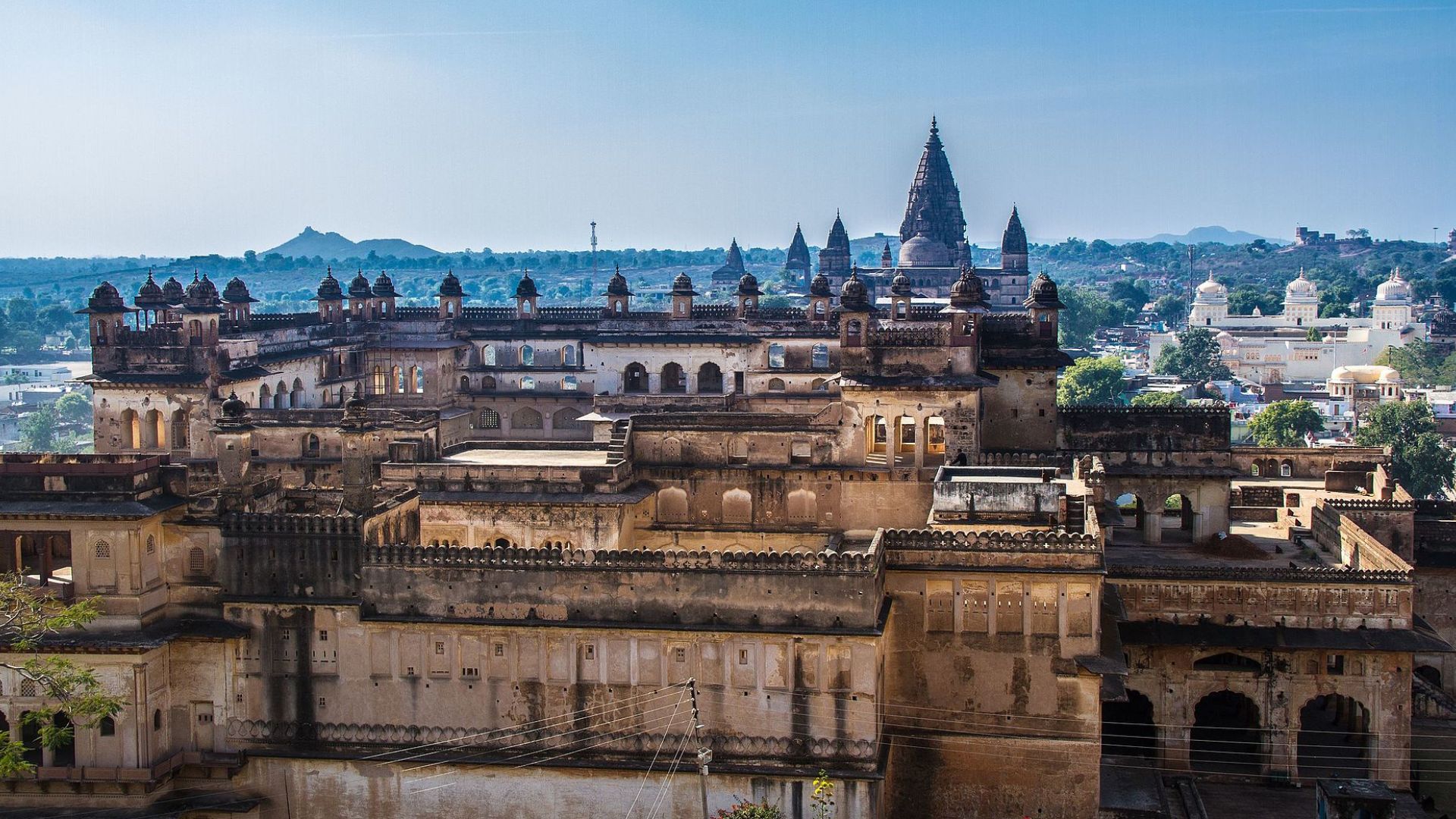
Just like Ayodhya, there is another place where Lord Rama is still regarded as a king — Orchha in Madhya Pradesh. During festivals like Diwali and Ram Navami, thousands of devotees visit to seek his blessings. Locals believe Ram rules Orchha during the day and returns to Ayodhya at night.
The Ayodhya of Madhya Pradesh
Orchha lies on the banks of the Betwa River in Niwari district, Madhya Pradesh. It is 126 km from Gwalior, 89 km from Tikamgarh, and 18 km from Jhansi in Uttar Pradesh. Bundela ruler Rudra Pratap Singh founded the town in the 16th century. It later became the capital of a princely state that ruled parts of central and northern India.
Ram Raja Temple — A Royal Shrine
The Ram Raja Temple makes Orchha unique. Here, Lord Ram is worshipped as a monarch. The legend goes back to the 16th century. King Madhukar Shah was a devotee of Lord Krishna, while his queen, Ganesh Kunwar, worshipped Lord Rama. Their different beliefs caused disputes. One day, the king said, “If Rama truly exists, then bring him to Orchha.”
The queen went to Ayodhya and prayed for 21 days. Lord Ram appeared before her as a child and agreed to come to Orchha on three conditions. He would be the only king of Orchha, stay where he was first placed, and travel only at specific times. The queen agreed. Since then, Lord Rama has been the king of Orchha.
Even today, the police give him a guard of honour every morning. No other official in Orchha receives such royal respect.
A Miracle That Created a Temple
The Ram Raja Temple was built during King Madhukar Shah Bundela’s reign (1554–1592). Queen Ganesh Kunwar belonged to the Paramar Rajput family of Gwalior. Before the Chaturbhuj Temple was ready, she placed the idol of child Rama in her palace dining hall for one night. When workers tried to move it later, the idol refused to budge. People saw it as a divine sign. The palace then became the Ram Raja Temple.
Sights Around the Temple
A garden near the temple has two tall minarets called Sawan and Bhado. Locals say tunnels once ran beneath them for the royal family’s use. These tunnels are now closed to the public.
Visitors cross a historic bridge to reach the Royal Enclave (Rajnivas). It includes Jahangir Mahal, Raj Mahal, Sheesh Mahal, and Rai Parveen Mahal. Jahangir Mahal, built for Mughal prince Jahangir, is the most famous. Its open corridors, carved stone screens, and Rajput-style decorations display Bundela craftsmanship.
Diwali Celebrations in Orchha
During Diwali, the Ram Raja Temple shines with thousands of lamps. Devotees gather to pray and sing hymns. The whole town glows in festive colors. People offer prayers for happiness and prosperity. Leather items are not allowed inside the temple.
Members of Orchha’s former royal family still live nearby and help keep traditions alive. Their presence adds to the town’s royal charm during the festival.
Orchha’s Timeless Legacy
Orchha blends devotion, architecture, and heritage. The tradition of worshipping Lord Rama as a king makes this town truly special. Its historic monuments, sacred temple, and grand Diwali celebrations attract pilgrims and tourists alike. For many, Orchha is not just a destination—it is a living story of faith and royalty.