
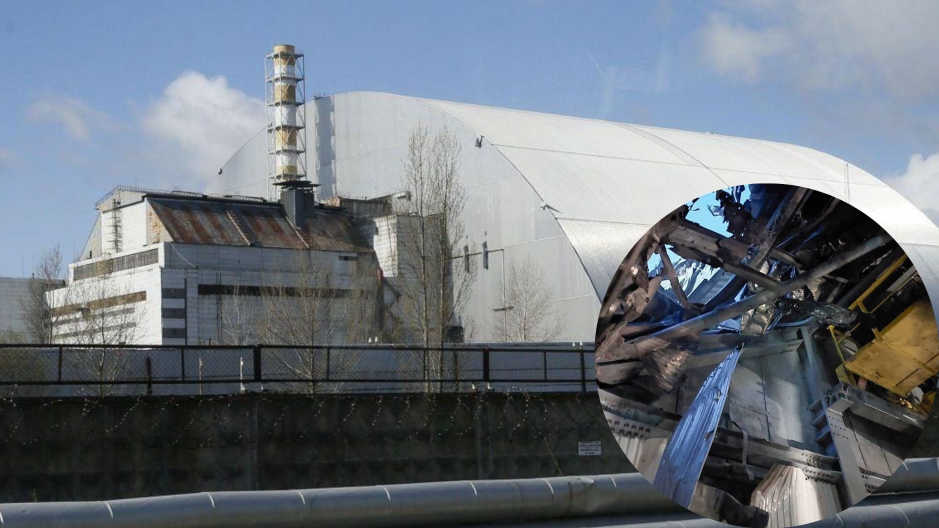

A drone slammed into the protective structure at the Chornobyl nuclear site on Friday. As a result, the shield that blocks radioactive remains from the 1986 disaster suffered serious damage. This structure was built to stop dangerous radiation from escaping.
Ukraine immediately blamed Russia for the attack. Officials said the impact weakened the barrier and left it unable to carry out its main safety task.
IAEA confirms structure lost key function
Soon after the incident, the International Atomic Energy Agency carried out an inspection. The team studied the steel confinement structure, which was completed in 2019. They confirmed that a drone hit it in February, three years into the war.
The agency stated that the hit reduced the structure’s effectiveness. This means it can no longer fully contain radioactive material inside.
IAEA Director General Rafael Grossi shared the verdict. He said the shield “had lost its primary safety functions, including its confinement capability.” However, he also made it clear that the main support frame and monitoring systems did not suffer permanent damage.
Some repair work has already started. Still, Grossi stressed that full restoration is necessary to stop further decay and ensure long-term nuclear safety.
Ukraine accuses Russia as radiation stays stable
On February 14, the UN released details from Ukrainian authorities. They said a drone carrying a high-explosive warhead struck the plant. It triggered a fire and damaged the outer layer of protection around Reactor Number Four.
Ukraine claimed the drone was Russian. In response, Moscow denied any role in the attack.
Even so, radiation readings stayed normal. The UN confirmed that no radioactive leaks were detected after the impact.
Chornobyl disaster still casts a long shadow
Back in 1986, the Chornobyl explosion sent radiation across Europe. Soviet officials then launched one of the largest emergency responses in history to control the fallout. Years later, in 2000, the final working reactor at the site was shut down.
Because the area remains dangerous, authorities installed the steel confinement structure in 2019. It was designed to seal in radioactive waste and protect future generations.
War increases nuclear risks in Ukraine
In the early days of the February 2022 invasion, Russian forces captured the Chornobyl site and nearby areas. They held the location for more than a month while advancing toward Kyiv.
Now, as the war continues, nuclear safety remains under threat. The IAEA carried out the latest inspection as part of a wider review of damage to power stations and substations across Ukraine.
This incident clearly shows how active fighting continues to endanger sensitive nuclear facilities.