
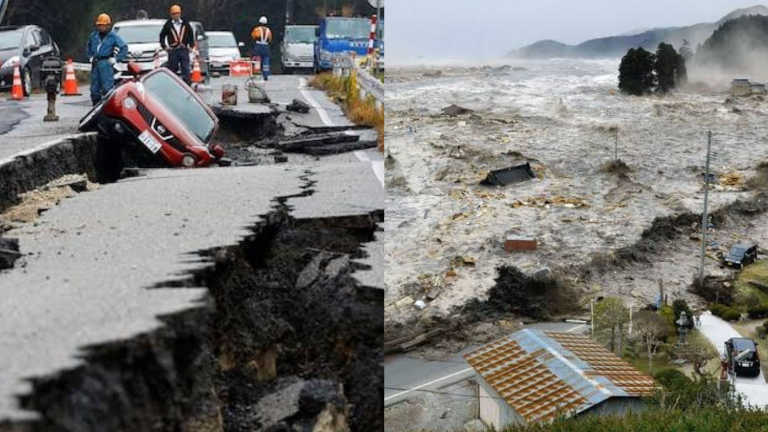

A powerful earthquake shook Japan’s northern coastline late Monday. The Japan Meteorological Agency (JMA) said several tsunami waves reached the shore soon after the ground shook. The 7.6-magnitude quake hit off the coast of Misawa on the Pacific side. Because of this, many residents rushed out of their homes, and thousands lost electricity.
Tsunami Warning and First Waves
Right after the earthquake, JMA issued a tsunami warning. One of the waves reached a port in Aomori, the region where Misawa is located. More waves followed. JMA said they measured up to 70 centimeters, or about two feet and four inches.
Warnings Lifted but Advisories Remained
By early Tuesday, JMA lifted the tsunami warning, according to Kyodo news agency. However, the agency kept lower-grade advisories in place for several hours in parts of northern Japan. These advisories were later cancelled.
Reports of Injuries and Damage
Public broadcaster NHK reported that a hotel worker in Hachinohe, Aomori, confirmed there were some injuries. The quake struck at 1415 GMT. The US Geological Survey said the earthquake occurred at a depth of 44 kilometers, or 27 miles.
Live footage showed broken glass scattered across the streets. People in Hachinohe fled their houses and moved to the city hall for safety, NHK added.
Around 2,700 homes in Aomori lost power, Kyodo said. Authorities also received several reports of fire after the quake.
Shaking Felt in Sapporo
The tremor was felt as far north as Sapporo. Smartphone alarms went off across the city to warn residents. An NHK reporter in Hokkaido said the quake caused intense horizontal shaking for about 30 seconds. He said the movement was so strong that he could not stay on his feet.
Earlier Tsunami Forecast
Before lifting the alert, JMA had warned that waves as high as three meters, nearly 10 feet, could hit parts of Japan’s Pacific coast. Top government spokesman Minoru Kihara urged people to stay in safe areas until officials confirmed the danger had passed.
More Quakes Possible
Government officials later said the region could experience more strong earthquakes in the coming days. The powerful tremor disrupted travel across northern Japan. Shinkansen bullet trains stopped running between Fukushima and Aomori. The operator said some services would resume on Tuesday morning.
Nuclear Plants Show No Irregularities
Kihara said he had “received no reports yet of abnormalities” from two nuclear power plants in northern Japan. He also said teams were still checking other nuclear facilities.
In 2011, a 9.0-magnitude earthquake triggered a lethal tsunami that killed or left missing nearly 18,500 people. It also caused a major meltdown at the Fukushima Daiichi nuclear plant.
Operators Report Stable Conditions
Shortly after Monday’s quake, Tohoku Electric Power posted on X that safety systems at its Higashidori plant in Aomori and the Onagawa plant in Miyagi had not shown any problems.
Japan’s High Seismic Risk
Japan sits on the meeting point of four major tectonic plates along the Pacific “Ring of Fire.” It is one of the world’s most earthquake-prone countries. The nation, home to around 125 million people, records nearly 1,500 tremors each year. Most are mild, but the damage depends on where and how deep the quake occurs.
Rising Odds of a Major Future Quake
Experts say earthquakes remain difficult to predict. Still, a government panel in January raised the chances of a massive quake along the Nankai Trough within the next 30 years to 75–82 percent. In March, the government warned that such a “megaquake” and the tsunami that followed could cause up to 298,000 deaths and economic losses reaching $2 trillion.