
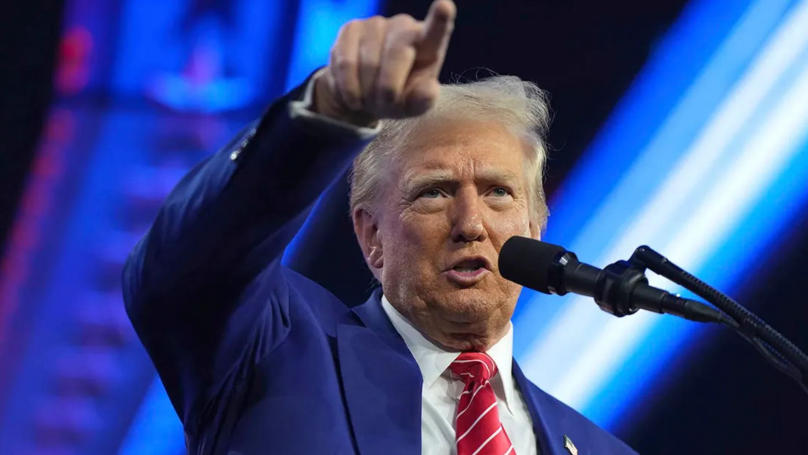

US President Donald Trump sparked fresh controversy on Friday after warning that he could impose a 50 per cent tariff on all Canadian-made aircraft sold in the United States. He said the move would come into force unless Canada “immediately” approves the certification of Gulfstream business jets.
Trump’s remarks added another sharp edge to already strained relations between Washington and Ottawa. He linked the proposed tariffs directly to Canada’s refusal to certify several Gulfstream aircraft models.
US warns of decertifying Canadian planes
In a post on TruthSocial on Thursday, Trump said the United States would move to decertify Bombardier Global Express jets. He went further by stating that the action would extend to “all aircraft made in Canada” until the dispute is resolved.
He accused Canada of unfair practices and said the certification issue has gone on for years without justification.
“Based on the fact that Canada has wrongfully, illegally, and steadfastly refused to certify the Gulfstream 500, 600, 700, and 800 Jets, one of the greatest, most technologically advanced airplanes ever made, we are hereby decertifying their Bombardier Global Expresses, and all Aircraft made in Canada, until such time as Gulfstream, a Great American Company, is fully certified, as it should have been many years ago,” Trump wrote.
Trump links tariffs to Gulfstream certification
Trump also claimed that Canada’s certification process has effectively blocked Gulfstream aircraft from being sold within Canada. According to him, this amounts to a trade barrier against a US company.
He warned that if the issue is not resolved without delay, he would take strong retaliatory action.
“Further, Canada is effectively prohibiting the sale of Gulfstream products in Canada through this very same certification process. If, for any reason, this situation is not immediately corrected, I am going to charge Canada a 50% Tariff on any and all Aircraft sold into the United States of America. Thank you for your attention to this matter!” he added.
Part of a wider US–Canada standoff
This threat is the latest development in a broader dispute between the two neighbours that has continued since Trump returned to office last year. Tensions have risen on several fronts, including trade, sovereignty, and foreign policy.
Just hours before Trump’s statement, Canadian Prime Minister Mark Carney said he expects Trump to “respect Canadian sovereignty.” His comment came after reports suggested that Alberta separatist groups had met with US officials.
Earlier tariff threats add to uncertainty
Earlier this week, Trump also warned Canada of even harsher measures. He said he could impose 100 per cent tariffs if Canada, the US’ second-largest trading partner, entered into a trade agreement with China.
These repeated warnings have added to uncertainty for businesses and investors on both sides of the border, especially in sectors like aviation and manufacturing.
Legal authority remains unclear
Despite the strong language, it is not clear whether Trump has the legal power to decertify Canadian aircraft. The White House has not issued any executive order related to aircraft certification or new tariffs on Canadian planes.
Trump also did not explain how the decertification process would work or which agencies would carry it out. For now, the threat remains a political statement rather than a formal policy action.