
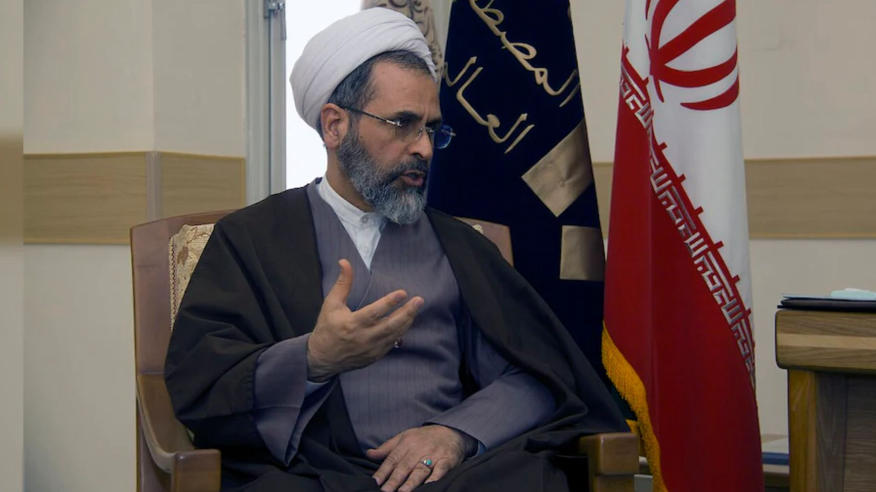

Iran has appointed Ayatollah Alireza Arafi as the country’s interim Supreme Leader. The move follows the death of longtime leader Ayatollah Ali Khamenei, who was killed in joint US–Israeli airstrikes on Tehran early Saturday.
Arafi now steps into the highest religious and political role in the Islamic Republic at a tense moment. The country faces growing regional conflict and internal uncertainty. His leadership will be closely watched both inside Iran and abroad.
A Career Built Inside Iran’s Clerical System
Arafi was born in 1959 in Meybod, in Yazd province. He comes from a religious family and has spent most of his life inside Iran’s clerical institutions. He studied in Qom under well-known Islamic scholars. Over time, he achieved the rank of mujtahid, which allows him to issue independent Islamic legal rulings.
His career developed during Khamenei’s leadership. Khamenei appointed him to important positions, including leading Friday prayers first in Meybod and later in Qom. These appointments showed strong trust from the country’s top authority.
Arafi also served as head of Al-Mustafa International University, a key institution that trains clerics from Iran and other countries. In 2019, he became a member of the Guardian Council, a powerful body that reviews laws and approves electoral candidates.
Experts say his combination of religious authority and administrative experience places him firmly among Iran’s senior clerical elite. His appointment signals continuity within the country’s religious leadership.
How the Constitution Guides the Transition
Iran’s Constitution requires that the Supreme Leader be a senior Shia cleric selected by the Assembly of Experts. This body consists of elected religious scholars.
After Khamenei’s death, the system calls for an interim leadership structure to manage key responsibilities. This arrangement remains in place until the Assembly of Experts chooses a permanent successor.
Because Arafi holds positions in both the Guardian Council and the Assembly framework, he had significant institutional influence during the succession process. Other possible candidates reportedly came from both hard-line and pragmatic factions within the clerical establishment.
Arafi’s Religious and Political Vision
Arafi has often spoken about the role of religious seminaries in society. He supports an active and politically engaged version of Shi’a Islam. In earlier remarks, he said:
“Seminaries need to be from the people, in solidarity with the downtrodden, be political, revolutionary, and international in approach.”
His statements reflect support for a religious system that remains deeply involved in politics and global issues.
Although Arafi has long experience and strong backing from Iran’s institutions, analysts note that he does not have a broad independent political power base outside the clerical system. This could affect how he governs during a period of external conflict and domestic tension.
A Historic Moment for Iran
Khamenei led Iran for nearly 37 years. He was killed on February 28, 2026. His death triggered national mourning and began a formal succession process.
Arafi’s appointment marks only the second leadership transition since the 1979 Islamic Revolution. The moment tests Iran’s constitutional system and its ability to stay united during crisis.
As Arafi assumes the country’s highest office, global attention will focus on how he manages religious authority, regional conflict, and internal stability in the months ahead.