
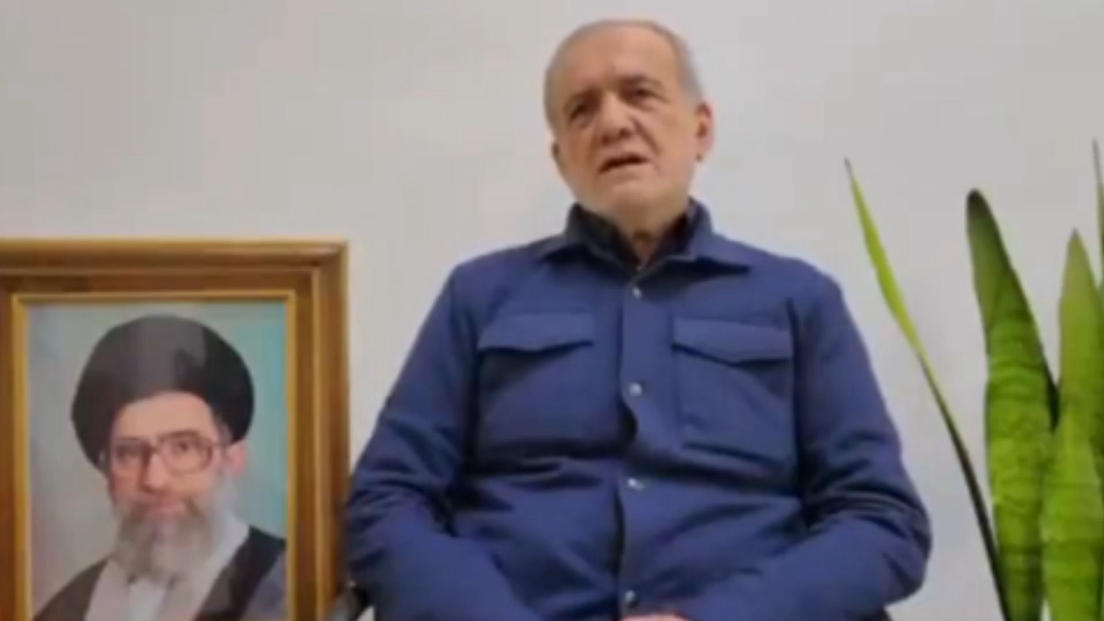

Iranian President Masoud Pezeshkian apologised on Saturday to neighbouring countries that were targeted in recent Iranian missile strikes. He delivered the apology during a speech broadcast on state television. He said Iran does not want conflict with countries in the region.
“I apologise… to the neighbouring countries that were attacked by Iran," Pezeshkian said in the televised speech.
Iran announces new policy on attacks against neighbours
Pezeshkian said Iran has adopted a new policy to avoid escalation in the region. He said Iran will not launch attacks on neighbouring countries unless those territories are used to launch strikes against Iran.
“Iran will not carry out attacks or missile strikes against neighboring countries unless an attack against Iran originates from those countries," Pezeshkian was quoted by Iran International as saying.
He added that Iran’s interim leadership council approved this policy. He said the move aims to prevent further conflict with regional states. Pezeshkian also said Iran does not seek hostility with neighbouring countries. However, tensions with Israel and the United States continue.
Iran says it will not surrender
Despite the apology, Pezeshkian said Iran will not give in to pressure from its enemies. He stressed that the country will defend itself. “The enemies must take their wish for the surrender of the Iranian people to their graves," he said.
Iran launched strikes after Khamenei’s killing
Iran has launched missile strikes over the past week after the killing of its Supreme Leader Ali Khamenei. The strikes hit several Gulf locations. These included Dubai and Abu Dhabi in the United Arab Emirates, as well as Qatar, Kuwait, and Bahrain.
Videos shared online showed damage in some areas.
US and Israel carried out Operation Epic Fury
The escalation began after the United States and Israel launched coordinated airstrikes on Iran on February 28. The operation, called Operation Epic Fury, targeted several Iranian cities, including the capital Tehran.
The strikes followed stalled nuclear talks and accusations that Iran had restarted nuclear activities. During the attack, Iran’s Supreme Leader Ali Khamenei was killed at his compound in Tehran. His daughter, son-in-law, and granddaughter also died in the strike. Khamenei’s wife, Mansoureh Khojasteh Bagherzadeh, later died after suffering injuries from the attack.