
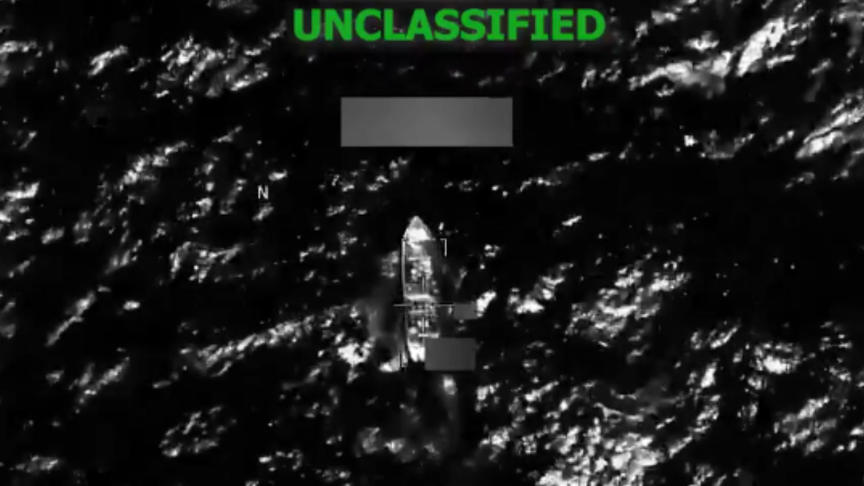

The United States Southern Command said on Wednesday that the US military carried out another strike on a suspected drug-smuggling vessel in the Caribbean. The attack killed four people.
In a post on X, formerly Twitter, the command said it conducted a “lethal kinetic strike on a vessel operated by Designated Terrorist Organisations.” The command is responsible for US military operations in Latin America.
Applying total systemic friction on the cartels.
— U.S. Southern Command (@Southcom) March 25, 2026
On March 25, at the direction of #SOUTHCOM commander Gen. Francis L. Donovan, Joint Task Force Southern Spear conducted a lethal kinetic strike on a vessel operated by Designated Terrorist Organizations. Intelligence confirmed… pic.twitter.com/VTzo4wkbpG
Death Toll Rises to 163
With this latest action, the total number of deaths has reached at least 163 since the US Department of Defence began targeting alleged “narco-terrorists” in September last year. So far, the military has carried out 45 such strikes on vessels.
However, the command did not present any evidence to support its claims. It stated that “intelligence confirmed the vessel was transiting along known narco-trafficking routes in the Caribbean and was engaged in narco-trafficking operations.”
Details of the Latest Operation
According to the statement, four suspected smugglers were killed in the strike. No US military personnel were injured. Officials said the operation is part of a broader strategy to apply “total systemic friction on the cartels.”
Earlier, last Friday, the US military conducted a similar strike in the eastern Pacific. That operation killed two people and left one survivor.
Questions Over Evidence and Legality
Although the US describes these actions as part of its fight against “narco-terrorism,” it has not provided clear proof that the targeted vessels were carrying drugs.
In the past, the United Nations and several humanitarian groups have criticised such strikes. They have called them extrajudicial killings.
Data Raises Further Doubts
A 2020 report by the US Drug Enforcement Administration showed that 74 per cent of cocaine entering the United States comes through the Pacific route. In comparison, only 8 per cent arrives via fast boats from the Caribbean.
Because of this, questions remain about the justification for targeting vessels in the Caribbean. So far, the White House has not clearly explained the evidence behind these military actions.