
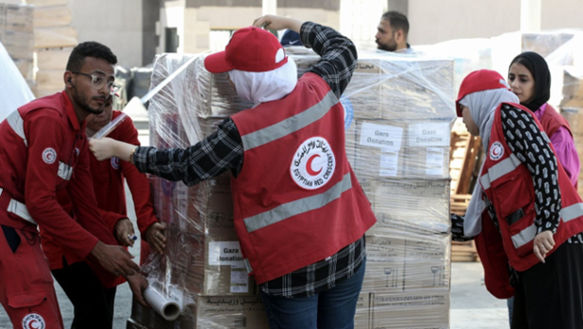

Several Arab nations and the United Nations have strongly criticized Israel for blocking humanitarian aid to Gaza. As a result, concerns are growing as hopes for extending the ceasefire begin to fade.
On Sunday, Egypt and Qatar firmly objected to Israel’s move, calling it a violation of the ceasefire. Meanwhile, UN humanitarian chief Tom Fletcher described the situation as “alarming.”
Israel Defends Its Decision
In response to the criticism, Israeli Prime Minister Benjamin Netanyahu defended the blockade. He claimed Hamas was seizing aid and using it to support its operations. Furthermore, he accused Hamas of rejecting a U.S.-backed proposal to extend the first phase of the ceasefire, which ended on Saturday.
On the other hand, a Hamas spokesperson dismissed Israel’s claims. He called the blockade “cheap blackmail” and a “coup” against the ceasefire agreement, BBC reported.
Previously, the ceasefire had paused 15 months of fighting. It also led to the release of 33 Israeli hostages in exchange for about 1,900 Palestinian prisoners.
Widespread Condemnation Follows
Shortly after Israel’s decision, Qatar’s foreign ministry issued a strong statement. It called the move a “clear violation” of the ceasefire and “international humanitarian law.” Similarly, Egypt denounced the blockade, accusing Israel of using starvation as “a weapon against the Palestinian people,” AFP reported.
In addition, Saudi Arabia voiced its disapproval. The kingdom expressed its “condemnation and denunciation” of Israel’s actions.
Meanwhile, UN Under-Secretary-General for Humanitarian Affairs Tom Fletcher took to X (formerly Twitter) to express concern. He emphasized, “International humanitarian law is clear: We must be allowed access to deliver vital lifesaving aid.”
Despite the mounting criticism, Netanyahu stood firm. “Hamas steals the supplies and prevents the people of Gaza from getting them,” he stated. “It uses these supplies to finance its terror machine, which is aimed directly at Israel and our civilians, and this we cannot accept.”
However, Hamas has repeatedly denied taking humanitarian aid.
Ceasefire Talks Remain Uncertain
At the same time, negotiations for the next phase of the ceasefire have barely started. This phase aims to establish a permanent truce, secure the release of all remaining hostages, and withdraw Israeli forces from Gaza.
Initially, phase two was expected to begin right after phase one ended. However, delays continue. So far, 24 hostages are confirmed alive, while 39 are presumed dead.
Looking ahead, phase three of the ceasefire plan focuses on recovering the bodies of Israeli hostages. Additionally, it includes the long-term reconstruction of Gaza, which could take years.
For now, Hamas refuses to extend the ceasefire without guarantees from mediators. It insists on a firm commitment that phase two will take place.