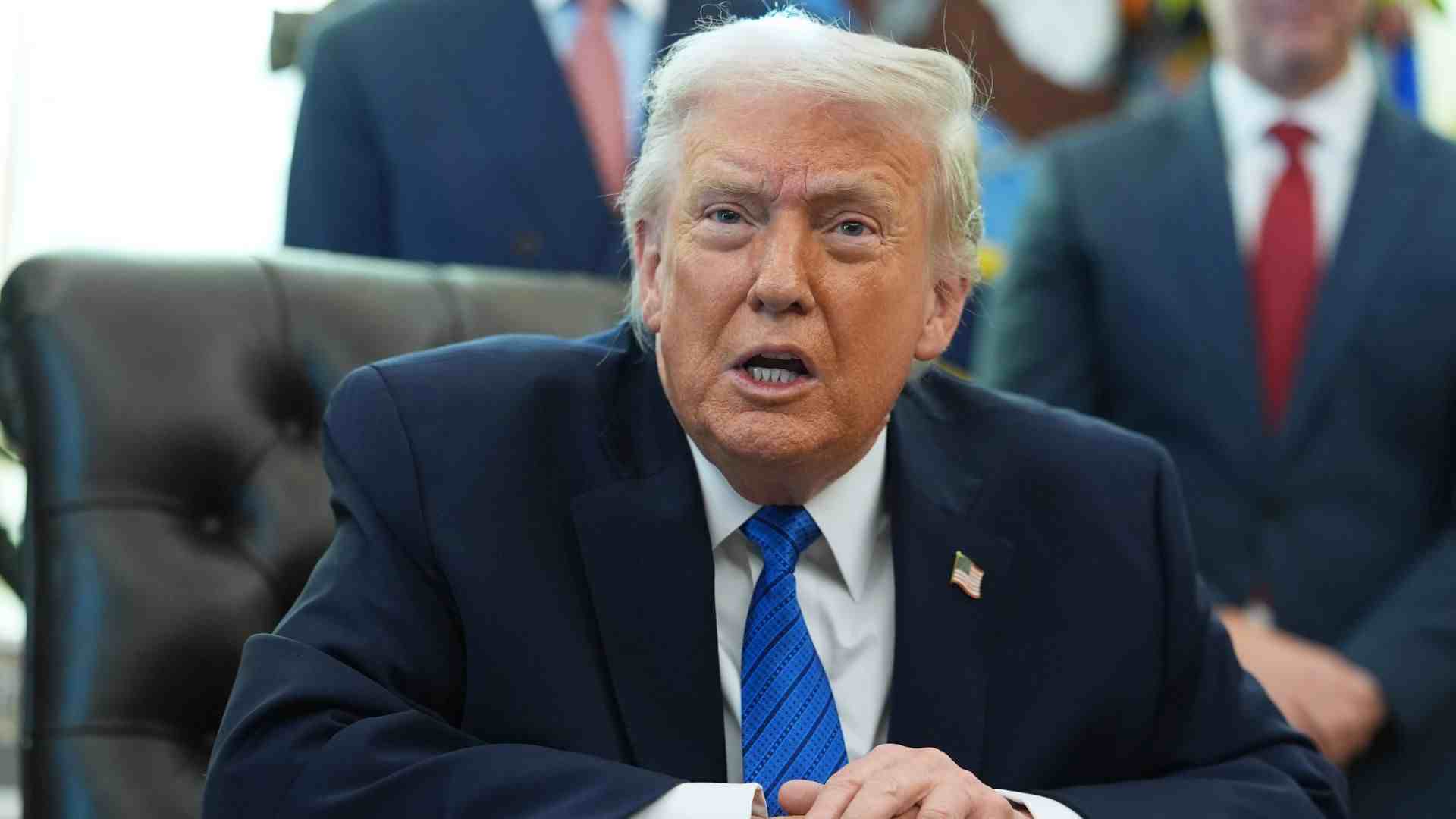
US President Donald Trump has launched another verbal attack on French President Emmanuel Macron, blaming France’s immigration policies for the country’s problems. Trump claimed that Paris could soon become a “Muslim city” because of the number of people entering France.
Trump accused Macron of allowing excessive immigration and ignoring his advice on controlling the country’s borders. He argued that France’s approach to immigration had created serious problems and contrasted it with his administration’s policies in the United States.
“Paris is going to be a Muslim city very soon, and that wasn't the deal,” Trump told reporters.
“You're letting everybody from the world come in. The whole world was coming in,” he added, criticising Macron’s immigration policies.
Trump also recalled his first meeting with the French president, claiming that he had warned Macron about the risks of his approach to immigration.
“I've known him for maybe eight or nine years and I told him as soon as I met him, I said 'you're making a big mistake',” Trump said.
“We closed our borders. He didn't,” he added, drawing a comparison between the US administration’s border policies and France’s approach.
Trump’s comments come at a time when France is dealing with unrest and growing political debate over immigration, national identity and the causes of public dissatisfaction.
France Faces Unrest and Rising Tensions
French authorities have been struggling to contain widespread unrest, with demonstrations reportedly turning into violent clashes across several cities.
The violence has reportedly led to public buildings being set on fire, shops being looted and historic landmarks coming under attack. More than 2,400 people have been detained by French law enforcement agencies. Meanwhile, nearly 1,000 police officers and gendarmes have reportedly suffered injuries while responding to the unrest.
Macron has strongly condemned what he called “unbridled violence” and warned that those responsible for the destruction would face legal action.
The French government has been working to restore order and bring the situation under control. However, Macron has not declared a national state of emergency.
The continuing unrest has increased pressure on the French administration to respond to public anger and restore stability. At the same time, political discussions have intensified over the reasons behind the violence and the broader challenges facing the country.
Immigration Debate Intensifies as France Examines Causes of Unrest
Trump has directly linked France’s unrest to immigration, arguing that the situation reflects the consequences of allowing too many people into the country without sufficiently strict border controls.
However, immigration is not the only issue being discussed in connection with the demonstrations. Economic difficulties, the rising cost of living, pressure on public services and frustration among young people have also emerged as important factors in debates about the unrest.
Right-wing politicians and commentators have called for stricter immigration controls, arguing that France needs a tougher approach to managing its borders. Nevertheless, the extent to which immigration has contributed to the violence remains a separate question from the wider economic and social grievances affecting the country.
As France works to restore calm, the debate over immigration, national identity and economic pressures continues to shape the political response to the unrest.