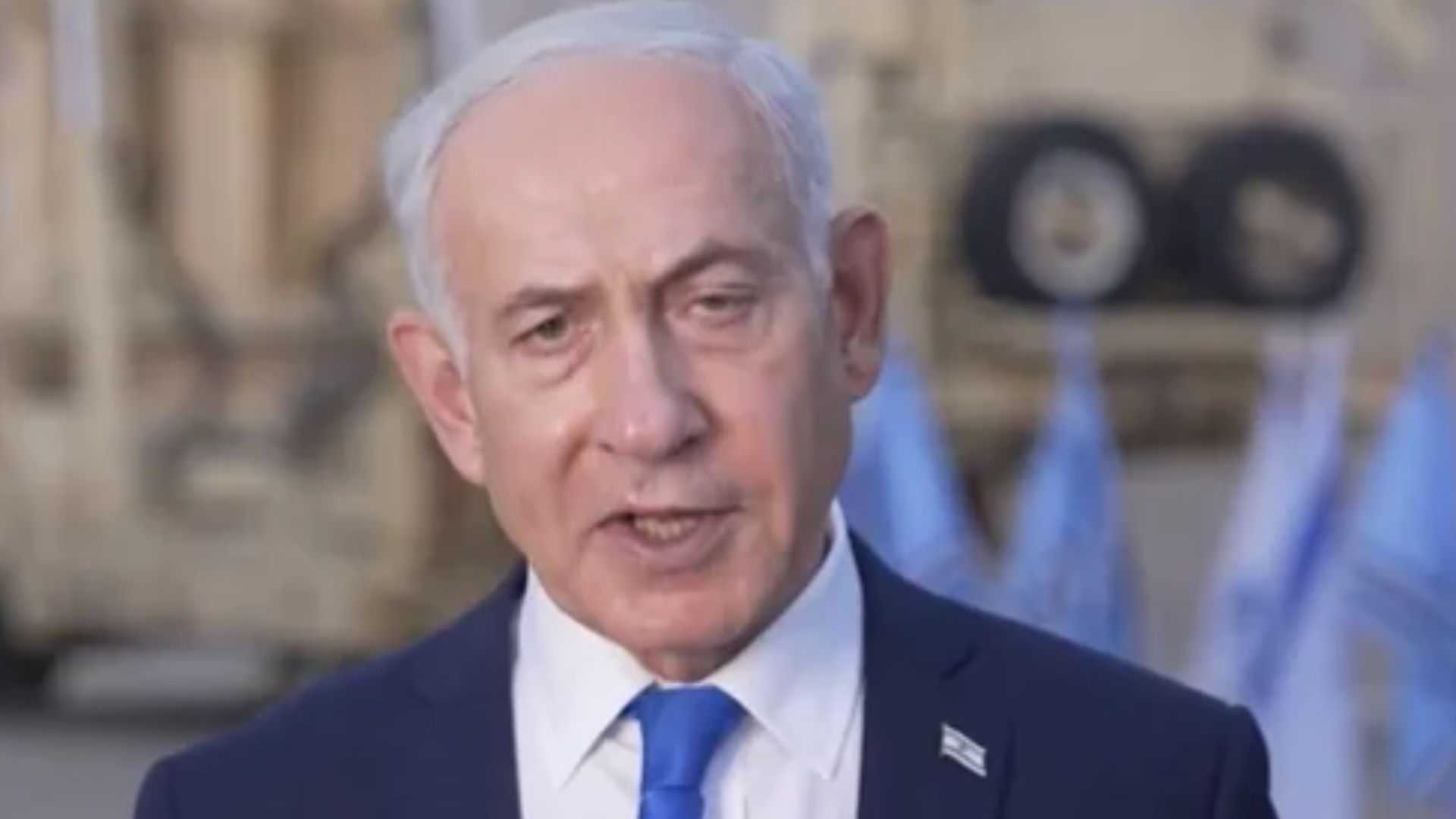
Israeli Prime Minister Benjamin Netanyahu has issued a strong warning to Iran ahead of Israel’s national elections, threatening a severe military response if Tehran or its regional allies launch an attack against Israel.
Speaking in Jerusalem alongside an Arrow anti-ballistic missile defence system, Netanyahu cautioned Iran against underestimating Israel’s military capabilities and its willingness to retaliate against any threat.
‘Do not test us. You will suffer blows of disproportionate force, far stronger than you can imagine,’ he said. The warning comes amid continued tensions between Israel and Iran, two long-standing regional rivals that have exchanged missile strikes and other attacks. The involvement of Iran-backed armed groups across the Middle East has further increased the risk of a wider confrontation.
Netanyahu’s remarks have also raised concerns about whether the existing tensions could develop into another round of military exchanges, particularly as Israel approaches a crucial electoral period.
What Military Options Does Iran Have Against Israel?
Iran has several potential ways to increase pressure on Israel, including using regional allies, launching direct missile attacks, conducting cyber operations and threatening important maritime routes. However, each option carries different military and political risks and could provoke a wider conflict.
1. Attacks Through Regional Allies
One possible approach would be to increase military activity by Iran-aligned armed groups operating in Lebanon, Yemen and Iraq. These groups could use drones and rockets to target Israeli positions or other locations, forcing Israel to respond while putting additional pressure on its air defence network.
Attacks launched from different directions could make Israel’s defensive operations more complicated. A sustained campaign could also disrupt civilian life and force Israeli authorities to devote greater resources to intercepting incoming threats.
However, the impact of such attacks would depend on several factors, including the weapons deployed, the targets selected and Israel’s ability to detect and intercept incoming projectiles.
The extent of coordination between these groups would also influence how effectively they could sustain pressure on Israel.
2. Direct Missile Strikes From Iranian Territory
A direct missile attack launched from Iran would represent a more serious escalation. Iran possesses ballistic missiles capable of reaching Israeli territory, while Israel maintains advanced missile defence capabilities, including the Arrow system.
If Tehran launched missiles directly at Israel, the Israeli government could respond by targeting Iranian military installations or other strategic infrastructure.
Such an exchange could quickly expand beyond the two countries, particularly if either side carried out repeated attacks or caused significant casualties and damage.
A direct confrontation would also increase the possibility of further involvement by regional actors, making it more difficult to contain the conflict.
3. Cyberattacks on Israeli Infrastructure
Iran could also attempt to disrupt Israeli institutions through cyber operations. Potential targets could include government computer networks, energy infrastructure and essential civilian services.
Cyberattacks could create operational difficulties and economic disruption without immediately triggering a conventional military confrontation. Depending on their scale and targets, they could also affect public services and critical systems.
However, identifying those responsible for a cyber incident can be difficult, particularly when governments do not publicly disclose the available evidence.
The potential consequences would depend on the nature of the operation, the systems affected and the ability of Israeli authorities to detect and contain the attack.
4. Pressure on Maritime Routes and Shipping
Another potential option involves threatening commercial shipping in the Gulf and nearby strategic waterways.
Disruptions to maritime traffic could affect international trade and energy markets, especially if they interfere with the movement of oil and other essential commodities.
Such actions could also draw a response from the United States and other countries that maintain military forces in the region to protect shipping and safeguard their strategic interests.
Any disruption to major maritime routes could therefore turn a bilateral confrontation into a broader international security concern.
These scenarios represent possible ways tensions could escalate. They do not establish that Iran has decided to pursue any particular military or non-military strategy.
Why Netanyahu’s Warning Is Significant
Netanyahu’s decision to deliver his warning beside an Arrow missile defence system carries both military and political significance. The setting highlights Israel’s air defence capabilities while reinforcing the government’s message that the country is prepared to respond to potential attacks.
The remarks also come at a politically important time, with national elections approaching. Security concerns have traditionally played a major role in Israeli politics, and the threat posed by Iran could influence voters’ assessment of the government’s national defence policies.
By taking a firm position against Tehran, Netanyahu is emphasising his commitment to confronting external threats and protecting Israeli territory.
However, the political impact of the warning remains uncertain. While security issues could become more prominent during the election campaign, voters may also focus on domestic political divisions, economic difficulties and other concerns affecting the country.
It remains unclear how much Netanyahu’s latest remarks will influence public opinion or change the priorities of the electorate.
Election Period Raises Concerns About Security
National elections can create uncertainty over whether a government’s attention is divided between domestic political demands and external security challenges.
Such periods may also raise concerns that hostile actors could attempt to test a country’s military readiness or political resolve.
Netanyahu’s threat of a ‘disproportionate’ response appears intended to discourage Iran from interpreting the election period as an opportunity to attack Israel or exploit a possible distraction within its leadership.
His message is that Israel’s willingness to retaliate will not depend on the timing of an attack or the country’s domestic political circumstances.
The warning is also aimed at reinforcing deterrence by making clear that any hostile action could carry serious military consequences.
However, strong public threats do not necessarily prevent escalation. If either side misjudges the other’s intentions or responds to an attack with further strikes, the situation could deteriorate rapidly.
How Could Rising Tensions Affect the United States?
The growing confrontation between Israel and Iran also presents a challenge for Washington, Israel’s principal security partner.
A renewed exchange of attacks could place the United States under pressure to help Israel defend itself while simultaneously working to prevent the conflict from spreading across the Middle East.
Washington would face the difficult task of balancing its security commitments to Israel with the need to limit regional instability and avoid a broader military confrontation.
An escalation could also affect the security calculations of other countries in the region, particularly those concerned about maritime trade, energy supplies and the risk of being drawn into the conflict.
For now, Netanyahu’s warning underscores Israel’s determination to maintain military deterrence against Iran as the country approaches its elections. Whether the message prevents further hostilities or contributes to an increasingly tense regional environment will depend on the decisions made by both sides in the coming period.