
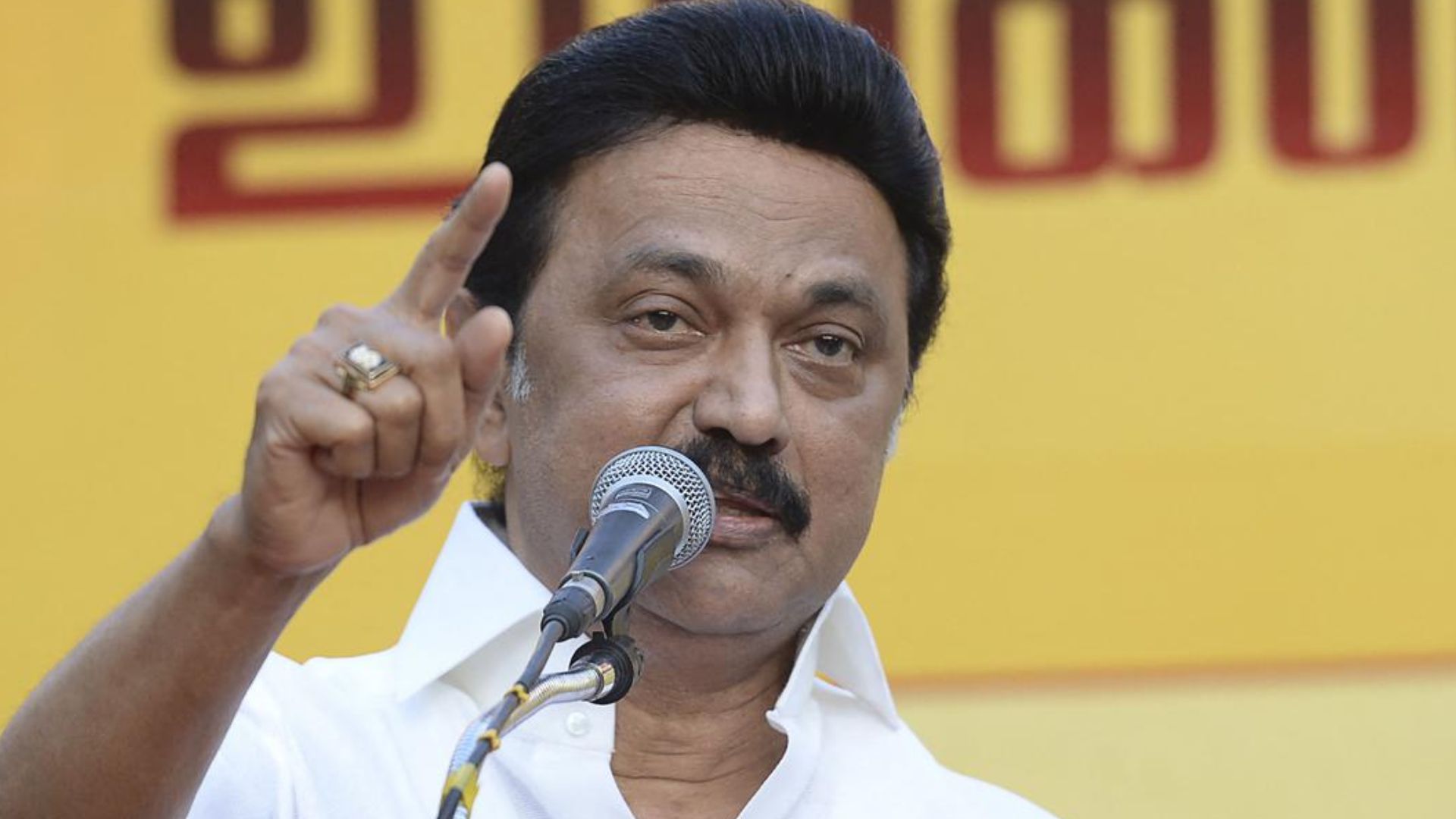

The Tamil Nadu government has replaced the Devanagari rupee symbol with a Tamil letter in its 2025-26 budget logo. This move, announced by Chief Minister MK Stalin on Thursday, has intensified the ongoing dispute with the central government over the three-language policy under the National Education Policy (NEP). Stalin accused the Centre of trying to impose Hindi on Tamil Nadu. Moreover, he called the NEP a "saffron policy" that promotes Hindi instead of national development.
DMK Opposes Language Imposition
The DMK strongly opposes what it calls "Hindi colonialism." The party argues that the Centre is forcing Hindi on Tamil Nadu through the NEP. Meanwhile, the Union government has accused the state of misleading people and harming students’ futures for political gain.
As expected, the decision triggered strong reactions from BJP leaders, including Union Finance Minister Nirmala Sitharaman. However, the DMK defended its choice, stating that it had every right to use Tamil in the budget logo. Furthermore, the party clarified that no rule prohibits such a move.
New Budget Logo
On Thursday, the Tamil Nadu government released its state budget logo. Notably, it featured ‘Ru,’ the first letter of the Tamil word 'Rubaai,' meaning rupee. Additionally, Finance Minister Thangam Thennarasu will present the budget on Friday. The logo also included the phrase "everything for all," reinforcing the DMK’s promise of inclusive governance.
Sitharaman’s Criticism
Reacting strongly, Nirmala Sitharaman called the decision unnecessary and divisive. She argued that it "promotes secessionist sentiments." Furthermore, she questioned why the DMK had not opposed the rupee symbol in 2010 when the Congress-led UPA government approved it. At that time, the DMK was an ally in the ruling coalition.
Tamil Roots of the Symbol
Interestingly, Sitharaman pointed out that a Tamilian, Th. D. Udaya Kumar, designed the ₹ symbol. He is also the son of former DMK MLA N. Dharmalingam. "By erasing it now, the DMK is not only rejecting a national symbol but also utterly disregarding the creative contribution of a Tamil youth," she posted on ‘X.’
Kiren Rijiju’s Response
Meanwhile, Union Minister Kiren Rijiju accused the DMK of dividing the nation for political gain. Additionally, he criticized Congress for supporting the move. "The Rupee ₹ symbol was designed by a Tamilian during UPA rule when DMK governed Tamil Nadu. My mother tongue is not Hindi, but I respect all Indian languages. There is no language imposition. PM Modi has done more to promote Tamil culture than any other leader," Rijiju posted on ‘X.’
Amit Malviya’s Statement
Similarly, BJP IT cell head Amit Malviya called the move an embarrassment for MK Stalin. He noted that the rupee symbol was designed by a Tamilian and approved when both Congress and DMK were in power. Additionally, he reminded that Tamil leader and Congress politician P. Chidambaram had honored the designer.
BJP Tamil Nadu’s Reaction
On the other hand, BJP Tamil Nadu President K. Annamalai strongly condemned the DMK’s decision. He claimed that the government was trying to divert attention from real public issues. Moreover, he reminded people that Udaya Kumar’s design was appreciated by Stalin’s father, the late DMK leader Karunanidhi.
DMK’s Language Policy
Despite criticism, the DMK refuses to follow the NEP’s three-language formula. Instead, it insists on continuing Tamil Nadu’s two-language policy of Tamil and English. The party believes that introducing Hindi would be unfair to the state’s linguistic heritage.
NEP’s Three-Language Formula
The NEP 2020 recommends that students learn three languages, with at least two being Indian languages. However, it does not mandate Hindi. Additionally, the policy applies to both government and private schools, giving states the flexibility to choose their preferred languages.
Meaning of the Rupee Symbol
According to official records, the rupee symbol combines the Devanagari "Ra" and the Roman capital "R." Moreover, two horizontal stripes at the top represent both the national flag and the "equal to" sign. The Government of India officially adopted the symbol on July 15, 2010.
Designer Refuses to Comment
Meanwhile, Professor D. Udaya Kumar, the designer of the rupee symbol, refused to join the controversy. Instead, he simply stated that it was a coincidence that his father was a DMK MLA.