
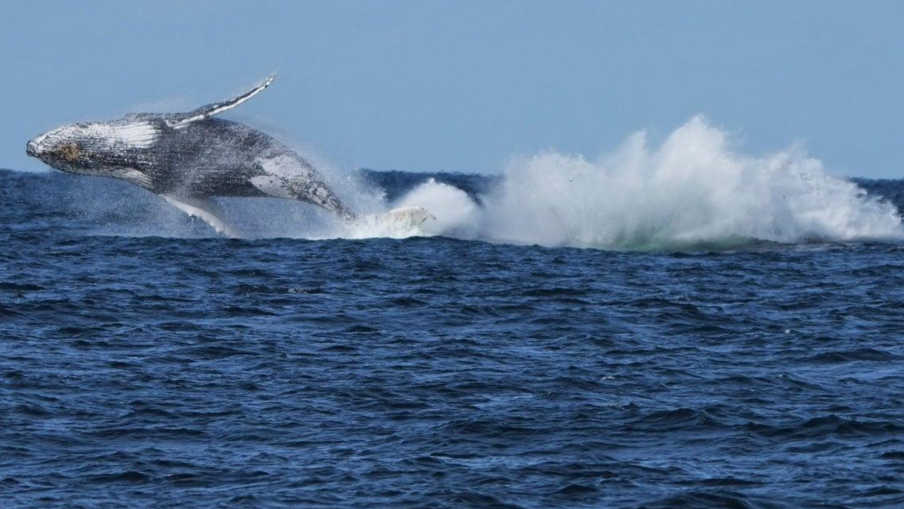

Earlier this month, a ferry in Sydney Harbour had to stop—not because of traffic, but due to an unexpected sight. Passengers on board watched in awe as humpback whales, as large as buses, surfaced near the boat. Interestingly, the whales appeared to be observing the humans, too.
Winter Brings the 'Humpback Highway'
Every year during June and July, Sydney's waters become part of the humpback migration route. Known as the “humpback highway,” this path follows Australia’s east coast. Nearly 40,000 humpback whales travel along it, moving from the cold waters of Antarctica to warmer breeding areas off Queensland.
Dr. Vanessa Pirotta, a wildlife scientist at Macquarie University and author of Humpback Highway, described the movement: “It’s blubber to blubber.” At the height of the migration, Sydney becomes one of the rare cities where people might see whales while walking, sipping coffee, or waiting for a bus—as long as they have a view of the sea.
Whales Travel Close to Shore
Humpbacks stay close to the coastline, making them highly visible. These whales grow up to 16-17 meters long and can weigh as much as 40 tonnes. As they cover their 10,000-kilometre journey from icy seas to tropical waters, they often swim within view of cities.
Pirotta said, “They are incredibly curious.” This year, some whales even entered the harbor, stopping boats from moving.
Famous Whales and Fan Favorites
Over time, some whales have gained celebrity status. One such whale was Migaloo, an all-white humpback seen from 1991 to 2020. Another is Blade Runner, known for her scars caused by a boat propeller.
Australians regularly spot these sea giants and often form emotional connections with returning individuals.
Whales Show Interest in People Too
Whale watchers often head out to sea hoping for a close-up. On a recent day, Ben Armstrong, a seasoned whale-watching skipper from Port Stephens, spotted two humpbacks breaching nearby. He told passengers to put down their phones and take in the moment.
Although he follows strict distance rules, some whales break them. Once, a group of whales surrounded his boat for an hour, playfully pushing it around. In another case, a whale separated from its group and swam directly to his vessel.
“It was like a dog greeting its master at the gate,” Armstrong said. That whale stayed nearby for 40 minutes, gently brushing the boat with its fins. “It was like, ‘Oh, there’s that boat I really like,’” he added.
A Memorable Experience for Tourists
Vincent Kelly, who traveled from Geelong, Victoria, was amazed by the show. Over two hours, he saw six humpbacks perform dramatic leaps and splashes.
“It was unbelievable to me,” Kelly said. “I didn’t expect to actually see a whale. But they were everywhere.”
A Conservation Success Story
This whale traffic shows how far the humpback population has come. Once hunted nearly to extinction, they were given protection in 1963. At that time, only a few hundred remained. Now, their numbers have grown to around 40,000.
However, the increase in whales also brings new risks. More whales mean more chances of accidental encounters with boats, or getting caught in fishing nets.
Changing Migration Patterns Raise New Questions
In recent years, whales have been seen giving birth in new areas, far from their usual spots. According to Pirotta, this could be due to climate change and reduced krill populations, which are the whales’ main food source.
As their numbers continue to grow, experts are asking how people and whales can safely share the coastline.
Still, many Australians now live just a short walk away from one of the world’s most spectacular wildlife events.
As Armstrong, the boat skipper, put it, “It grounds you, I think. It makes you realize there’s a lot more out there than what we think there is in nature.”