
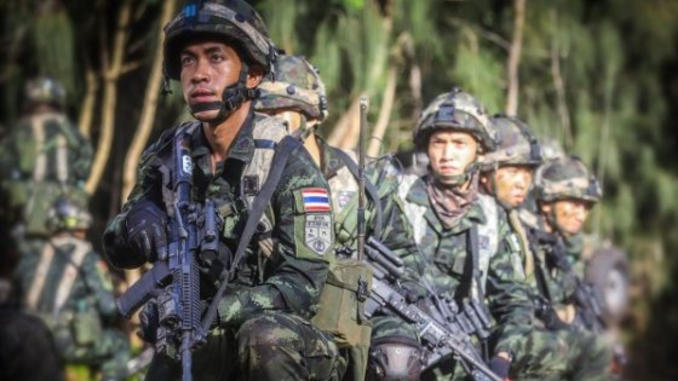

Tensions between Thailand and Cambodia escalated sharply early Sunday, just hours after both nations publicly agreed to a ceasefire. Cambodian soldiers opened fire on Thai troops near the Ta Kwai temple in Thailand’s Surin province. This renewed violence came shortly after U.S. President Donald Trump claimed credit for brokering peace through a series of phone calls.
Ceasefire Talks Overshadowed by Border Clash
Thailand’s foreign ministry had announced on Saturday evening that both sides had agreed "in principle" to a ceasefire. The ministry also said it was ready to start direct talks with Cambodia. But that agreement appeared shaky after gunfire erupted near the Ta Kwai temple the next morning. Local news outlet Khaosod first reported the clash. The skirmish has raised fears that the conflict could stretch on, casting doubt on whether both governments can control forces on the ground or uphold diplomatic commitments.
Mounting Casualties and Civilian Displacement
The human toll from the conflict continues to rise. Cambodian officials confirmed 12 more deaths on Saturday, bringing their total to 13. The Thai military reported another soldier killed, raising its death toll to 20—most of them civilians.
Mass evacuations have also intensified. Cambodia’s Information Minister Neth Pheaktra said that 37,635 people from over 10,865 families have fled from three border provinces. Meanwhile, Thai officials have moved more than 131,000 residents from villages near the disputed area.
Trump’s Phone Diplomacy Sparks Mixed Reactions
President Donald Trump said late Saturday that he had spoken to Cambodian Prime Minister Hun Manet and was planning to call Thai Acting Prime Minister Phumtham Wechayachai. Posting on his platform Truth Social, Trump wrote, “Just spoke to the Prime Minister of Cambodia relative to stopping the War with Thailand... We do not want to make any [trade] deal with either Country, if they are fighting—and I have told them so!”
Trump also compared the situation to his earlier claims of involvement in the India-Pakistan standoff, stating, “Many people are being killed in this War, but it very much reminds me of the Conflict between Pakistan and India, which was brought to a successful halt.”
Thailand’s foreign ministry later confirmed the phone call with Trump. Acting PM Phumtham reportedly urged Trump to tell Cambodia that Thailand was ready to begin immediate talks to enforce the ceasefire.
UN Chief Calls for Immediate Ceasefire
United Nations Secretary-General António Guterres expressed alarm over the border violence. In a post on X (formerly Twitter), he said,
“I am deeply concerned about the recent armed clashes... I remain available to assist in efforts towards a peaceful resolution of the dispute.”
He urged both countries to agree to a ceasefire without delay and offered UN assistance to support diplomatic talks.
Long-standing Dispute at the Core
This latest outbreak is part of a long-running dispute over ancient temples and surrounding territory along the Thai-Cambodian border. The contested region, consisting mostly of remote farmland and jungle, has long been used to stoke national pride and political support in both countries.
Fighting has included the use of heavy artillery and rocket fire. While Thailand initially denied using controversial cluster munitions, it later admitted that they “may be employed when necessary.”
Human Rights Watch strongly criticized the use of these weapons, especially in areas populated by civilians, saying they can cause devastating harm over time.
Notably, neither Thailand nor Cambodia has signed the 2008 Convention on Cluster Munitions. Both countries have faced criticism in the past for using these weapons, particularly during the 2011 conflict that killed 20 people.