
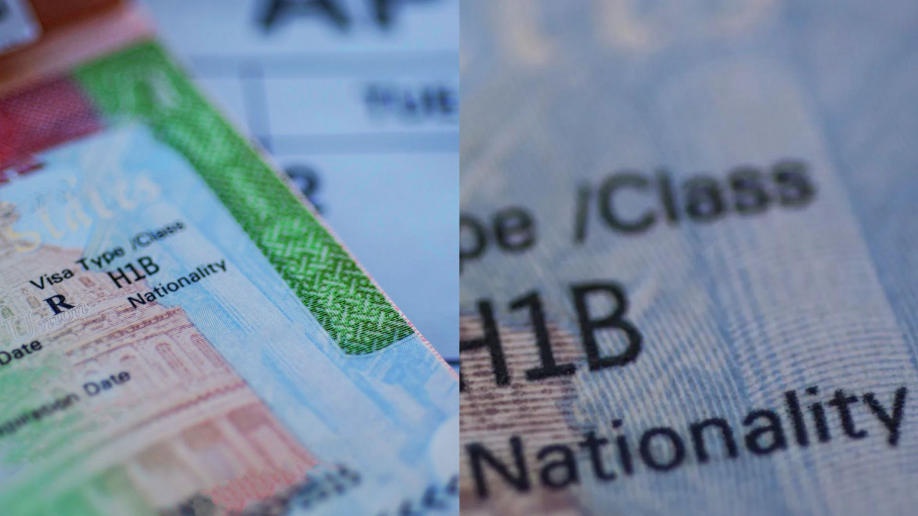

US President Donald Trump unveiled a drastic increase in H-1B visa fees on Friday, marking a major policy shift. As a result, experts believe the move could effectively end the program by making it unaffordable for companies.
Trump announced that employers must pay $100,000 annually for each H-1B visa. Previously, companies paid only $215 to register for the lottery and $780 to sponsor workers. Now, the new fee is higher than the median salary of a fresh H-1B employee, which stands at $97,000. It also makes up over 80% of the average salary for all H-1B workers, estimated at $120,000.
Consequently, India, the largest user of the H-1B program, will face the biggest impact. Analysts warn this step could hurt Indo-US relations even more than Trump’s 50% tariffs on Indian exports.
Key Changes Announced by Trump
The Financial Times explained the change in clear terms: “The six-figure ($100,000) application fee — which (US Secretary of Commerce Howard) Lutnick said employers would have to pay annually — marks a departure for the government, which currently charges $215 to register for an H-1B visa lottery and an additional $780 for employers that sponsor visa applicants.”
Earlier, employers paid less than $1,000 per application. However, under Trump’s executive order, the new fee will be counted only as an application cost and must be paid every year.
In addition, Trump announced a “gold-card” visa scheme. Under this, individuals can buy a US visa for $1 million (₹9 crore), while corporations can purchase one for $2 million (₹18 crore).
Why the H-1B Program Could Collapse
Because of this hike, H-1B visas will become too expensive for most employers. Companies will now need to cover both the worker’s salary and the huge visa fee, doubling their expenses.
A 2025 USCIS report revealed that the median salary for new H-1B workers is $97,000, while continuing employees earn $132,000, with an average of $120,000. Therefore, if the visa fee matches or exceeds the employee’s pay, companies may stop applying altogether.
India Stands to Lose the Most
In 2024, the US approved 399,395 H-1B visas. Significantly, Indians received 71% of these approvals, more than the combined total of the next nine countries. China came a distant second with 11.7%.
As a result, Indian IT firms, which depend heavily on H-1B workers, will face severe disruptions. The US tech industry, which also relies on skilled foreign professionals, will likely feel the ripple effects.
Ultimately, this move could further strain relations between India and the US, deepening tensions already heightened by tariffs and trade disputes. Experts call it “a direct attack on the foundation of skilled immigration between the two countries.”