
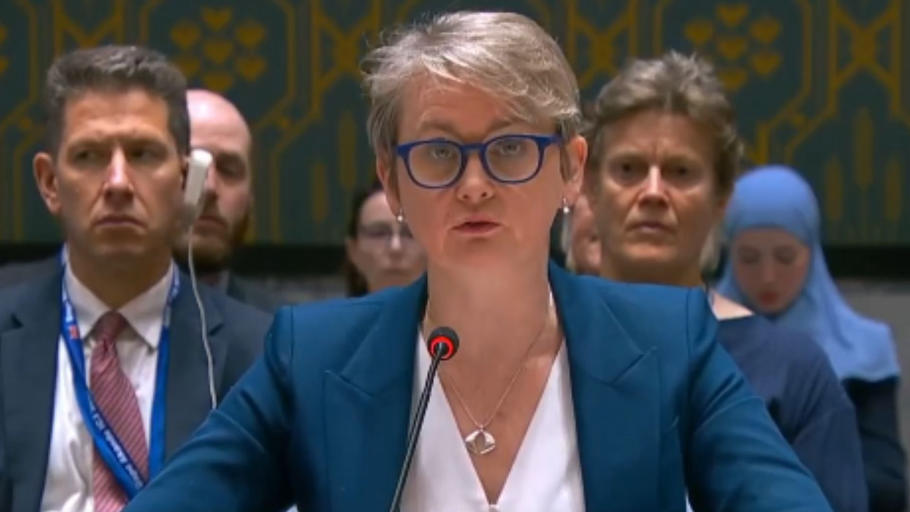

Britain’s Foreign Minister, Yvette Cooper, warned on Monday that Russia’s repeated airspace violations could lead to an armed conflict. Speaking at a UN Security Council meeting, she emphasized NATO’s readiness to defend its territory.
Reuters quoted Cooper as saying, “Your reckless actions risk direct armed confrontation between Nato and Russia. Our alliance is defensive but be under no illusion we stand ready to defend Nato’s skies and Nato’s territory.”
She added that, “If we need to confront planes operating in Nato space without permission then we will do so.”
Recent Incursions by Russia
Earlier, Estonia reported that three Russian MiG-31 fighter jets entered its airspace on Friday. They stayed for 12 minutes before NATO forces forced them to withdraw.
Western officials described the move as deliberate, arguing that Russia intended to test NATO’s response and resolve. Similarly, just over a week earlier, more than 20 Russian drones entered Polish airspace. NATO jets intercepted them and shot some down.
UN Security Council Responds
In response, the UN Security Council met on Monday to discuss the violations. NATO scheduled consultations for Tuesday to coordinate its next steps.
Furthermore, several Western ministers supported Cooper, warning that repeated breaches could not be dismissed as accidental.
Moscow Denies Allegations
Meanwhile, Russia quickly rejected the warnings. Deputy UN Ambassador Dmytry Polyanskiy called the claims “baseless” and “hysterical.” Reuters quoted him as saying, “We won’t be partaking in this theater of the absurd.”
He added, “When you decide that you want to engage in a serious discussion about European security, about the fate of our common continent, about how to make this continent prosperous and secure for everybody, we’ll be ready.”
Rising Tensions in Europe
Overall, the incidents highlight growing tensions between NATO and Russia. NATO insists it is acting defensively. However, repeated provocations increase the risk of accidental or deliberate armed clashes. Therefore, NATO officials stress the need for coordinated responses to maintain European security and deter further aggression.