
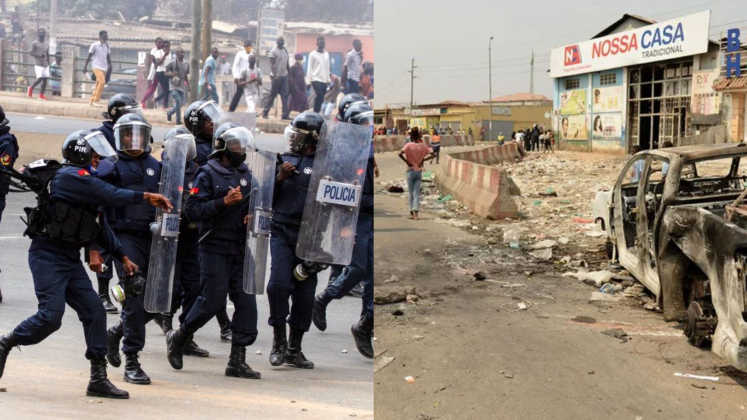

Two days of violent protests and looting in Angola over rising fuel prices have left at least 22 people dead, the government said on Wednesday. The unrest, among the worst the country has seen in years, erupted after taxi drivers launched a strike to oppose a steep hike in fuel prices.
The protests began on Monday, just a few weeks after the fuel cost rose from 300 to 400 kwanzas (around $0.33 to $0.43) per litre. Angola is a major oil-producing country, yet most of its people struggle with poverty.
Violence Spreads in Cities Across Angola
Gunfire broke out in the capital Luanda and other major cities on Monday and Tuesday. Protesters clashed with police, and many were seen looting shops and warehouses. They took food and supplies, damaging at least 66 stores in the process.
🚨 ANGOLA: Já são 22 mortos nos protestos em Angola contra a alta dos combustíveis, fome e pobreza.
— Dennys Deeh (@DennysDeeh_) July 31, 2025
Mais de 1.200 presos, 200 feridos e dezenas de saques em Luanda.
pic.twitter.com/RrnlbCx2nk
“We regret 22 deaths, including one police officer,” said Interior Minister Manuel Homem. He shared the figures with reporters after a cabinet meeting led by President Joao Lourenco. Nearly 200 people were injured, and police arrested more than 1,200 during the unrest.
Tense Calm Returns but Security Tightens
By Wednesday, Luanda was quieter but tense. Most streets remained empty, and many shops stayed closed. Some people waited in lines outside petrol stations. Security forces were stationed in key areas, and public transport slowly resumed service after being shut down for two days.
The violence had also spread beyond the capital. Following the cabinet meeting, officials released a statement saying the vandalism and riots had caused a “climate of widespread insecurity.” The government blamed "criminal elements" for turning a peaceful protest into a security threat.
Teen Killed by Police During Protest
In Lubango, a southern city, a 16-year-old was shot dead by police on Tuesday. Officials said he was part of a group trying to storm the local office of the ruling MPLA party. Police later confirmed the officer involved had fired the fatal shot.
Angola Faces Rising Poverty and Public Anger
The protests were triggered by the government’s decision to reduce fuel subsidies. The move came after the International Monetary Fund (IMF) advised Angola to spend more on health and education instead of fuel support. But the sudden price increase has angered many people, especially as they already face high inflation and unemployment.
Angola, with a population of about 36 million, has an inflation rate near 20% and a jobless rate close to 30%. The World Bank predicts poverty levels could remain around 36% through 2026 if the economy does not improve.
Many citizens feel the government is out of touch with their needs. "The government seems to ignore its population," said Daniel Pedro, a 32-year-old teacher from Luanda. “They say that youth is the future of tomorrow, yet today it is unemployed. I have a deep feeling of insecurity,” he told AFP.
Protests Also Target Corruption and Leadership
Anger is not only about fuel prices. On Saturday, nearly 2,000 people protested in Luanda. Along with condemning the price hike, they carried signs criticizing President Joao Lourenco and the ruling MPLA party. Some accused them of corruption and neglect.
Similar demonstrations had already taken place on the previous two weekends.
In a joint statement on Wednesday, opposition parties UNITA and Bloco Democratico said the country is facing a “severe economic and social crisis.” They blamed government policies that they say are “disconnected from the country’s reality.”
Rights Groups Slam Use of Force
Human rights groups, including Amnesty International, have condemned the police response. They say security forces used excessive force against peaceful protesters. Angola still carries scars from its long civil war (1975–2002) and the nearly 40 years of authoritarian rule under former President Jose Eduardo dos Santos.