
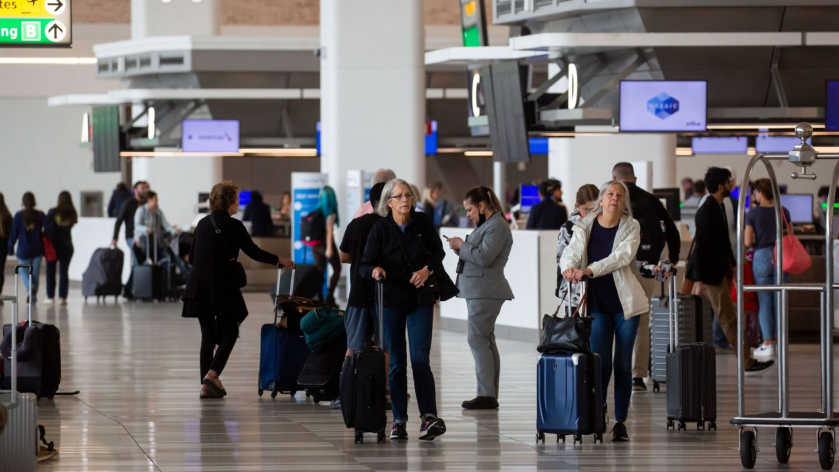

The holiday season in the United States has turned difficult as the government shutdown hits air travel. Millions of people are preparing to travel, but flight cancellations have already begun.
Ten Percent of Flights Reduced Nationwide
Starting Friday, November 7, the Federal Aviation Administration (FAA) will cut 10 percent of flights at 40 airports. The move is meant to reduce pressure on air traffic controllers who have been working without pay for 37 days. It is now the longest shutdown in US history.
The cuts will happen gradually — four percent on Friday, six percent by November 11, eight percent by November 13, and 10 percent by November 14.
Major airports like Atlanta, Dallas Fort Worth, Denver, Chicago O’Hare, and Los Angeles International will face the biggest impact. According to FlightAware, more than 750 US flights have already been cancelled. American Airlines cancelled 220 flights daily. Delta cut around 170 flights, and Southwest removed 100 flights from its schedule.
Why the Flight Cuts Happened
The ongoing shutdown has left air traffic controllers unpaid. Many are calling in sick because of financial stress and exhaustion.
Nick Daniels, president of the National Air Traffic Controllers Association, told NBC News, “It’s unprecedented to go through two full paychecks, 37 days, and receive no compensation.” He said some controllers cannot even afford gas to reach work.
Jeff Guzzetti, a former FAA investigator, explained that flight cuts help prevent mistakes. “The FAA will reduce potential risk of an overworked controller, or an understaffed facility, from making a mistake and running two airplanes into each other,” he said.
No Clear End to Disruptions
The FAA started cutting flights on November 7. However, there is no clear timeline for when full schedules will return. Airlines and unions have urged Congress to end the shutdown quickly.
Flight Cancellations Raise Fares
The cuts come at one of the busiest times of the year. Thanksgiving is only weeks away. Experts estimate that around 1,800 flights could be cancelled daily, affecting more than 260,000 passengers.
Airfares are also expected to rise sharply. Data from Going.com shows fares could increase by seven to ten percent compared to last year. Airlines such as United, Delta, and American said they would refund passengers who cancel trips, even if tickets are non-refundable.
Travel experts have advised people to book flexible or backup tickets. Frontier Airlines CEO Barry Biffle warned, “Don’t book a basic ticket. Book economy on Frontier so you can reuse the ticket value as changes are free or you can get a credit.”
Package Deliveries Will Slow Down
Flight cuts will also delay deliveries. Airports in Memphis and Louisville — hubs for FedEx and UPS — are affected. As a result, people should expect slower package deliveries this month.
International Flights Remain Stable
International flights are expected to run as usual. Flight Centre CEO Graham Turner told ABC News, “Generally, international flights will be protected, from what we believe.”
American Airlines also said most long-distance flights will continue on schedule. However, Bloomberg reported that changes are still possible if the shutdown continues.
Shutdown Creates Historic Crisis
FAA Administrator Bryan Bedford said he has never seen such measures before. “We’re in new territory in terms of government shutdowns,” he said.
For now, travelers across the US face one of the toughest holiday travel seasons in years, with no clear end to the flight chaos.