
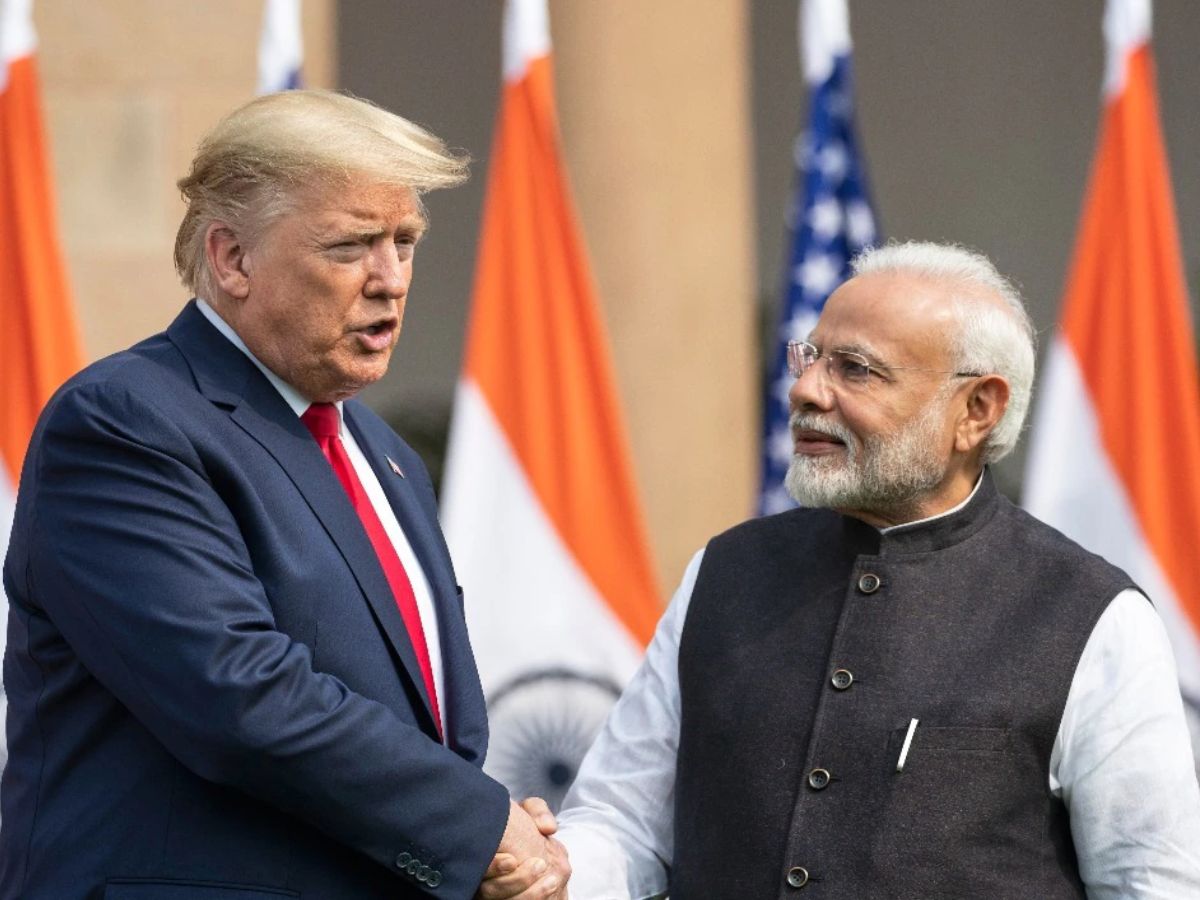

Congress leader Randeep Singh Surjewala on Saturday said the future of the US–India trade framework is uncertain. He spoke after the Supreme Court of the United States struck down tariffs imposed under the International Emergency Economic Powers Act (IEEPA). He argued that the Modi government signed the agreement in haste and must now review it.
US Supreme Court Strikes Down IEEPA Tariffs
First, the Supreme Court delivered a 6-3 verdict against US President Donald Trump. The court ruled that his administration exceeded its authority by using the 1977 IEEPA law to impose broad import tariffs. As a result, the judges invalidated billions of dollars in “reciprocal” and emergency tariffs.
Soon after, according to Reuters, the White House said that additional ad valorem duties imposed under IEEPA would no longer remain in force. Officials added that authorities would stop collecting them as soon as possible.
Uncertainty Over 18 Percent Reciprocal Tariff on India
Because of this ruling, questions have emerged about the 18 percent “reciprocal tariff” imposed on Indian goods under the so-called “historic” trade deal.
Surjewala said, “The fate of the US – India Trade Deal, i.e., ‘Framework Agreement’, executed in a great hurry by the Modi Government, is now under a serious cloud.”
He then asked, “Will the Modi Government now annul/cancel the US – India Trade Deal?”
2/2
— Randeep Singh Surjewala (@rssurjewala) February 20, 2026
The fate of the US – India Trade Deal, i.e., ‘Framework Agreement’, executed in a great hurry by the Modi Government, is now under a serious cloud.
MODI GOVERNMENT HAS MUCH TO ANSWER TO THE NATION:
1.Why did the Modi Government suddenly rush to execute the US – India Trade… https://t.co/gPZVMooyjO
Trump Announces 10 Percent Global Tariff
Meanwhile, Trump quickly responded to the court’s decision. He announced a fresh 10 percent global tariff on foreign goods. The new tariff will take effect on February 24 at 12:01 am local time.
He is using Section 122 of the Trade Act of 1974 to impose it. However, this law allows such tariffs to remain in force for only 150 days unless Congress extends them. Therefore, the long-term future of the measure remains unclear.
Congress Questions Agricultural Imports from US
At the same time, Surjewala raised concerns about agricultural imports. He asked whether the Modi government would stop importing Processed Maize (Dried Distillers’ Grains – DDG), Jowar (sorghum), Soyabean, Cotton, Fresh and Processed Fruits, and nuts such as Almonds, Walnuts and Pistachios from the United States.
He also asked, “Will the Modi Government declare that it will no longer withdraw ‘Non-Tariff Barriers’, i.e., withdraw the meagre subsidy on agriculture or permit import of ‘Genetically Modified – GM’ crops into India, thereby protecting our seed integrity, purity, and biodiversity?”
Questions Over $500 Billion Import Commitment
Furthermore, Surjewala questioned whether the government would continue with any obligation to import US$ 500 billion worth of American goods nearly ₹45 lakh crore over the next five years at zero tariff. He said such a commitment could harm Indian manufacturers and industry.
He also asked, “Will the Modi Government promise to protect India’s data and digital security?”
Jairam Ramesh Calls Trade Deal an ‘Ordeal’
In addition, senior Congress leader Jairam Ramesh criticised Prime Minister Narendra Modi. He said, “If Mr. Modi had not been so desperate to protect his fragile image and waited just 18 days more, Indian farmers would have been saved their agony and distress and Indian sovereignty would have been protected.”
He further said, “The India-US trade deal is really an ordeal that India is being subjected to by the Prime Minister’s desperation and surrender.”
Yesterday after the US Supreme Court struck down his tariffs policy, President Trump declared that (i) Mr. Modi is his great friend; (ii) the India-US trade deal will continue as announced; (iii) he had personally halted Operation Sindoor on May 10 2025 by threatening to increase… pic.twitter.com/khzl8Pq32L
— Jairam Ramesh (@Jairam_Ramesh) February 21, 2026
Overall, the US court ruling has intensified political debate in India. Opposition leaders now demand clarity on the future of the bilateral trade agreement.