
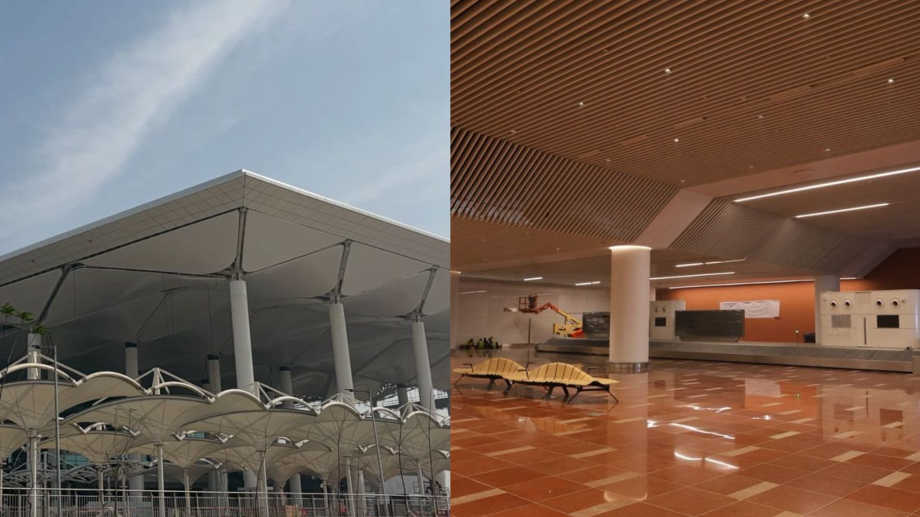

Prime Minister Narendra Modi will inaugurate the first phase of the Noida International Airport in Jewar, Uttar Pradesh, on Saturday. The airport will serve as a major international hub for nearby cities such as Noida, Meerut, Ghaziabad, Mathura and Agra. Moreover, it will provide direct access to key religious and tourist destinations.
Airport to Strengthen Delhi-NCR Aviation Network
The government has developed this airport as the second international gateway for the Delhi-NCR region. It will support operations at Indira Gandhi International Airport. As a result, both airports will reduce congestion, increase passenger capacity, and improve Delhi-NCR’s global aviation status.
Capacity to Grow Significantly
Ahead of the launch, PM Modi shared images of the airport, highlighting its modern infrastructure. Initially, the airport will handle around 12 million passengers each year. However, once authorities complete all phases, the capacity will rise to nearly 70 million passengers annually.
Advanced Infrastructure Ensures Smooth Operations
The airport features a 3,900-metre runway. Therefore, it can handle wide-body aircraft such as the Boeing 777-300ER. In addition, it includes modern navigation systems like the Instrument Landing System and advanced lighting. These systems will ensure safe and smooth operations in all weather conditions, day and night.
At the same time, planners have designed the airport as a multi-modal transport hub. It will connect road, rail, metro, and regional transit networks. Consequently, it will reduce travel time and lower logistics costs.
Design Blends Modernity with Indian Heritage
The airport’s terminal reflects Indian culture and tradition. Designers have taken inspiration from the ghats of Varanasi and Haridwar. Furthermore, they have included haveli-style courtyards, local materials, traditional art, and lattice screens. As a result, the design combines heritage with modern architecture.
Focus on Sustainability and Green Energy
The airport also promotes sustainability. It uses natural light and ventilation to reduce energy use. Additionally, it includes rainwater harvesting systems and plans to adopt renewable energy. Therefore, authorities aim to meet net-zero emission goals.
Major Investment with Wide Coverage
The first phase of the project has cost around ₹11,200 crore under a public-private partnership model. Officials describe it as one of India’s largest greenfield airport developments.
Moreover, the airport will serve a wide catchment area within a 120-minute travel radius. This area includes Delhi, Ghaziabad, Gautam Buddha Nagar, and parts of Meerut, Sonipat, Jhajjar, and Rewari. Hence, it will significantly improve regional connectivity.
PM Modi shared some pictures on X of Jewar airport yesterday,
Tomorrow, 28th March is a day of immense importance for the people of Uttar Pradesh and the NCR. Phase I of Noida International Airport will be inaugurated. This will boost commerce and connectivity. It will ease congestion at the IGI Airport in Delhi. The Noida airport is… pic.twitter.com/oZZAs6tUk6
— Narendra Modi (@narendramodi) March 27, 2026