
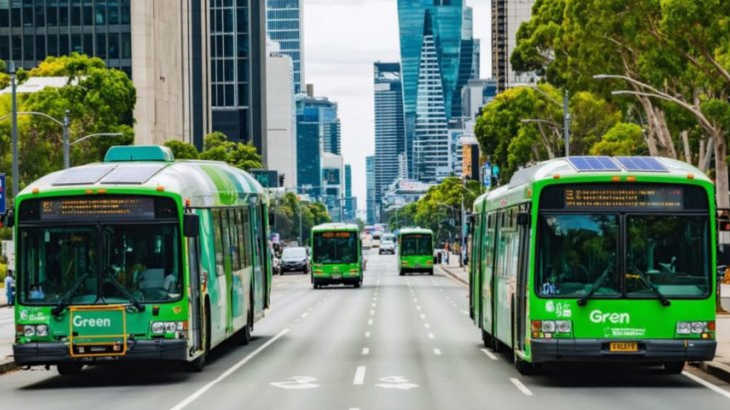

Authorities in Australia have decided to make public transport free in some regions. They took this step to help people deal with rising fuel prices linked to the ongoing West Asia conflict.
The state of Victoria, which includes Melbourne, will offer free travel on trains, trams, and buses throughout April. Tasmania will also remove fares from Monday until the end of June.
Move Aims to Cut Dependence on Private Vehicles
The main goal is to reduce the use of private cars. Petrol prices have increased sharply due to disruptions caused by the conflict involving the US, Israel, and Iran. The situation has also affected the Strait of Hormuz, a key route for global oil and gas supply.
Victoria Premier Jacinta Allan said the decision will provide quick relief to people.
“This won’t solve every problem, but it’s an immediate step to help Victorians right now,” she said.
In Tasmania, Premier Jeremy Rockliff said the move will support families struggling with higher fuel costs. The plan also includes free school bus services, which will help commuters save more each week.
Other States Take Different Approach
Not all Australian states have adopted free transport.
In New South Wales, Transport Minister John Graham said the government wants to save resources. Officials expect long-term pressure on public transport systems.
South Australia has expanded travel concessions for senior citizens while covering higher fuel costs. Queensland has highlighted its existing low flat fare system. Western Australia said its fares are already low, with Premier Roger Cook noting they are at historic levels.
Fuel Prices Surge Across Australia
Fuel prices in Australia have risen sharply. The average petrol price has reached A$2.38 per litre, up from around A$2.09 when the conflict began.
The federal government, led by Prime Minister Anthony Albanese, said fuel supply remains stable. Officials explained that the price rise is due to global market pressure, not shortages.
Global Impact of Energy Disruptions
The effects of the crisis are not limited to Australia. Several countries are taking steps to manage rising fuel costs.
India recently supplied 38,000 metric tonnes of petroleum to Sri Lanka. This included 20,000 tonnes of diesel and 18,000 tonnes of petrol, helping the country deal with supply disruptions.
Iran’s Foreign Minister Abbas Araghchi said the Strait of Hormuz remains open for “friendly nations” such as China, Russia, India, Iraq, and Pakistan.
Countries Take Steps to Save Energy
Many countries are introducing measures to reduce fuel use.
Egypt has ordered early business closures and promoted remote work. Ethiopia has asked government offices to reduce commuting by placing non-essential staff on leave.
In the Philippines, authorities have declared a national emergency. They have introduced subsidies for transport workers, reduced ferry services, and started a four-day work week for government employees.