

Since 1945, many Western books, movies, and news reports have mostly credited the U.S., Britain, and France for defeating Nazi Germany in World War II. But they rarely highlight the Soviet Union’s key role.
On May 2, 1945, Soviet soldiers captured Berlin. They even raised their flag above the Reichstag, the German parliament. Just two days earlier, Adolf Hitler had shot himself as Soviet troops entered Berlin. Still, Western coverage often skips over these crucial events.
Moscow Marks 80 Years Since Nazi Defeat
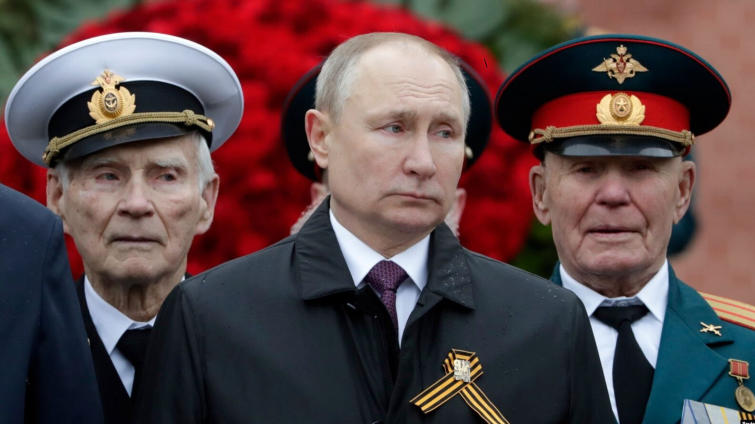
On May 8–9, 2025, Russia hosted a major event in Moscow to remember the Allied win over Nazi Germany. However, leaders from the U.S., Britain, and France were missing.
In contrast, Chinese President Xi Jinping attended the event. China had also fought against the Axis powers in the war. So, the absence of Western leaders wasn’t surprising, especially because the event strongly focused on the Soviet Union’s role — something often left out in Western versions of WWII.
Hitler’s Attack on the Soviet Union Backfired
Originally, Nazi Germany and the Soviet Union were allies. But on June 22, 1941, Hitler made a huge mistake. He ordered German troops to invade the Soviet Union.
This decision completely changed the war. British Prime Minister Winston Churchill, already under pressure, saw hope when the Soviets joined the fight.
During the war, the Soviet Union lost over 10 million soldiers. This number was far greater than the combined deaths of U.S. (407,000), Britain (383,000), and France (567,000) troops.
Indian Soldiers Played a Vital Role Too
The war wasn’t fought only by Western powers. Over 2 million Indian soldiers, under British rule, fought bravely in Europe, North Africa, and East Asia. Sadly, around 90,000 of them died.
Both Britain and France relied heavily on soldiers from their colonies. These colonial troops were often placed on the front lines and faced the worst battles.
Britain Needed Soviet and U.S. Support to Survive
During this time, Britain was struggling. From September 1940 to May 1941, the German air force bombed London during what was known as the Blitz. The Royal Air Force and Royal Navy defended the island, but the threat remained.
Churchill knew that Britain could not survive alone. He needed help — especially from the U.S. and the Soviet Union. But America was not eager to join another European war, especially after World War I.
President Franklin Roosevelt was trying to lift the U.S. economy after the Great Depression. He didn’t see any direct reason for America to join the fight.
Japan’s Attack on Pearl Harbor Changed Everything
Everything changed on December 7, 1941. Japan attacked Pearl Harbor in Hawaii. This forced the United States into the war.
That evening, Churchill was dining at Chequers with U.S. Ambassador Gil Winant and Roosevelt’s envoy Averell Harriman.
According to The Christian Science Monitor, “A butler brought in a portable radio for the party to listen to the BBC Home Service. When the attack was confirmed Churchill leapt to his feet and said he must declare war on Japan at once. His guests dissuaded him from this impetuous act, historian Walter Reid recounts in Churchill 1940–1945, his book about wartime relations among the Allied leaders.”
Churchill immediately called Roosevelt and asked, “Mr. President, what’s this about Japan?” Roosevelt replied that the attack was true and said, “they were all in the same boat now.” Churchill took that as a sign of victory. He knew America would finally join the war.
Later, Churchill wrote in his memoir: “Being saturated and satiated with emotion and sensation, I went to bed and slept the sleep of the saved and thankful.”
Allied Powers Shift the Momentum
By 1942, the combined power of the U.S., Soviet Union, Britain, and France began to overwhelm the Axis powers. In 1944, Soviet forces launched powerful attacks from the East.
Meanwhile, Japan had advanced quickly in Asia. It captured Singapore, Burma, and the Andaman Islands. But the U.S. changed the game in August 1945 by dropping atomic bombs on Hiroshima and Nagasaki. This ended the war in the East.
World Split into Two After the War
After 1945, the world became divided. The U.S. led NATO, while the Soviet Union created the Warsaw Pact. Eastern Europe, including East Germany, came under Soviet control.
During the Cold War, Western countries downplayed the Soviet role in WWII. Popular Hollywood films like The Guns of Navarone and The Longest Day focused on American and British heroism. They barely mentioned the Soviet effort or the huge role played by Indian soldiers under British rule.
Old Fears Resurface in Today’s Conflicts
Now, with the war in Ukraine, the horrors of WWII seem to be repeating. Western Europe, once confident in peace, is feeling anxious again.
Former U.S. President Donald Trump’s criticism of NATO has made European countries like Germany, France, and Britain more nervous about their security.
At the same time, China’s Xi Jinping stood alongside Russian President Vladimir Putin during the recent Moscow event. This display of unity has raised concerns among Western powers.
Power Now Shifts Towards Asia
Today, global influence is moving away from the West. India is expected to become the world’s third-largest economy by 2027. That means two of the top three economies—India and China—will be Asian.
The West is no longer the only driver of the world order. Asia is rising, and with it, history’s forgotten contributions — like those of the Soviet Union and Indian soldiers — are coming back into focus.